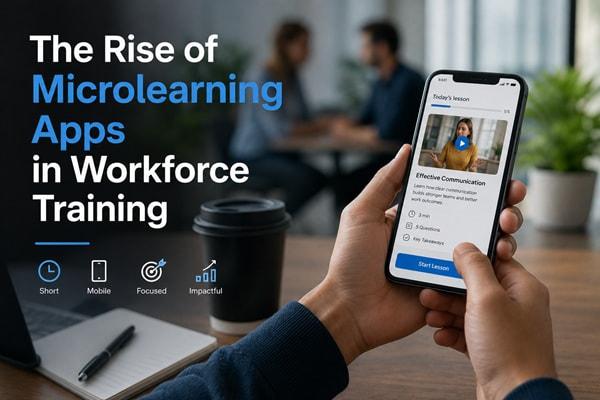
Microlearning apps are becoming more relevant in workforce
training because organizations need faster, more flexible ways to help
employees learn while work keeps changing. Instead of relying only on long
training sessions or traditional LMS modules, companies are using short,
mobile-friendly lessons to support onboarding, compliance refreshers, product
updates, sales enablement, and continuous skills development. This article
explains why microlearning apps are growing, what makes them useful for modern
teams, where they fit inside a broader learning strategy, and what
organizations should consider before adopting them. For institutions and
corporate learning teams, the rise of microlearning apps is not only about
shorter content. It reflects a larger shift toward mobile-first, data-informed,
and more adaptive learning operations.
- Quick
Answer
- Why
Workforce Training Is Moving Toward Shorter Learning Formats
- What
Microlearning Apps Actually Do
- Why
Microlearning Apps Fit Modern Workforce Behavior
- Where
Microlearning Apps Work Best in Corporate Training
- Microlearning
Apps vs Traditional Training Tools
- What
Organizations Should Evaluate Before Adoption
- How
to Build a Practical Microlearning App Strategy
- Common
Mistakes When Implementing Microlearning Apps
- Conclusion
- FAQ
Quick Answer
Microlearning apps are rising in workforce training because
they help organizations deliver short, focused, mobile-friendly learning
experiences that employees can complete more easily during the flow of work.
They are especially useful for training needs that require frequent
reinforcement, fast updates, and easy access across distributed teams.
Unlike traditional training programs that often require
longer sessions, microlearning apps focus on small learning moments. These may
include short videos, quick quizzes, job aids, scenario prompts, flashcards,
checklists, product updates, onboarding steps, or compliance reminders.
For corporate learning teams, the main value is not simply
shorter content. The value comes from reducing learning friction, improving
access, supporting continuous learning, and using data to understand learner
behavior. A microlearning app can help employees revisit important knowledge at
the moment they need it, especially when training must support performance, not
just completion.
However, microlearning apps are not a replacement for every
type of training. They work best when connected to a broader learning strategy,
clear learning objectives, and a platform experience that supports tracking,
sequencing, and learner engagement.

Why Workforce Training Is Moving Toward Shorter Learning Formats
Workforce training has changed because work itself has
changed. Many employees now operate in faster, more distributed, more
tool-heavy environments. Training can no longer depend only on scheduled
classroom sessions, long e-learning modules, or occasional workshops.
Organizations still need structured learning, but they also
need training that can keep up with daily operational change.
In many companies, employees need to learn about:
- new
products
- updated
policies
- compliance
reminders
- software
workflows
- customer
handling standards
- sales
scripts
- leadership
behaviors
- safety
procedures
- internal
process changes
- AI
and digital tools
The challenge is that these learning needs often appear
continuously, not only during formal training cycles. A sales team may need a
new product update before a campaign launch. A customer service team may need a
revised response script after policy changes. A field team may need safety
reminders before performing a task. A manager may need a short leadership nudge
before a difficult conversation.
This is where microlearning apps become useful. They support
training as a continuous operational layer, not only as an occasional event.
The rise of microlearning apps also reflects a broader
reskilling pressure. The World Economic Forum’s Future of Jobs Report 2025
highlights how technological change, automation, and labor market shifts are
reshaping skills demand. World
Economic Forum Future of Jobs Report 2025
For employers, this creates a practical problem: training
must be faster to update, easier to access, and more closely connected to work.
Microlearning apps are growing because workforce learning is
becoming less event-based and more continuous.
This does not mean long-form training disappears. Instead,
organizations are adding shorter learning formats to support reinforcement,
readiness, and skill application between formal training moments.
What Microlearning Apps Actually Do
A microlearning app is a digital learning application
designed to deliver short, focused learning experiences, often through mobile
devices. The content is usually organized into small lessons or learning units
that employees can complete quickly.
Microlearning apps may include:
- short
videos
- quick
assessments
- interactive
cards
- scenario-based
prompts
- flashcards
- checklists
- short
readings
- progress
tracking
- reminders
- badges
or gamification
- completion
analytics
- mobile
notifications
- downloadable
resources
- certification
or completion records
The Association for Talent Development describes
microlearning as short pieces of learning content that can often be accessed on
demand when learners need them, including while performing their job. ATD
microlearning definition
That “on demand” element is important. In workforce
training, the value of learning often depends on timing. A lesson is more
useful when it appears close to the moment of need.
For example, a short lesson about handling customer
objections may be more valuable before a sales call than inside a long course
completed several weeks earlier. A safety checklist may be more useful before a
field task than inside a one-time training manual. A software tip may be more
useful when an employee is learning a new workflow.
A microlearning app turns training from something employees attend into something they can access when work requires it.
A strong microlearning app does not simply host short
content. It organizes learning into a usable experience. It should help
learners know what to do next, help administrators track progress, and help
organizations improve the content over time.

Why Microlearning Apps Fit Modern Workforce Behavior
Microlearning apps fit modern workforce behavior because
many employees already use mobile devices as part of daily work and
communication. They are used to checking information quickly, switching between
tasks, and accessing guidance when needed.
In this environment, a training model that requires long
uninterrupted attention may create friction. Employees may understand the
importance of training but still struggle to complete it if the format does not
match their workflow.
Microlearning apps reduce that friction in several ways.
First, they make learning easier to start. A short lesson
feels more manageable than a long module, especially when employees are busy.
Second, they make learning easier to resume. If lessons are
modular, employees can continue their pathway without needing to remember where
they stopped inside a long course.
Third, they support mobile access. This matters for
distributed teams, field workers, frontline employees, hybrid employees, and
learners who do not always work at a desk.
Fourth, they can create a rhythm of reinforcement. Instead
of delivering information once, organizations can repeat, test, and reinforce
key knowledge over time.
Deloitte’s 2024 Global Human Capital Trends emphasizes how
work is becoming less bounded by traditional structures and how organizations
are rethinking human performance in changing work environments. Deloitte
2024 Global Human Capital Trends
For learning leaders, this creates a practical implication:
training systems need to be more flexible, more responsive, and more connected
to actual employee behavior.
The appeal of microlearning apps is not only convenience. It
is their ability to match learning delivery with how employees already move
through work.
This is why microlearning apps are particularly relevant for
organizations that need to train employees across locations, time zones, job
roles, or operational contexts.
Where Microlearning Apps Work Best in Corporate Training
Microlearning apps are not equally useful for every training
objective. They work best when the learning need is specific, recurring, and
actionable.
Onboarding and Role Readiness
New employees often receive too much information too
quickly. A microlearning app can break onboarding into smaller steps, helping
employees learn policies, tools, workflows, product knowledge, and cultural
expectations over time.
Instead of overwhelming new hires in the first week,
organizations can create a phased learning pathway. A new employee may complete
short daily lessons, quick knowledge checks, and practical reminders aligned
with their role.
This can make onboarding feel less like a one-time
information dump and more like a guided transition into work.
Compliance Refreshers
Compliance training often requires repetition. Employees may
complete an annual compliance module, but still need reminders about key
procedures, risk areas, or behavioral expectations.
Microlearning apps can support compliance by delivering
short refreshers throughout the year. This can be useful for data privacy,
workplace safety, anti-harassment training, financial controls, or
industry-specific regulations.
The app does not necessarily replace formal compliance
documentation. Instead, it helps reinforce important behaviors after the formal
training is completed.
Sales Enablement and Product Updates
Sales teams often need fast access to current product
information. When pricing, features, competitors, or customer objections
change, waiting for a long training cycle may be too slow.
Microlearning apps can deliver short product updates,
comparison cards, objection-handling scenarios, and quick quizzes. This helps
sales teams stay aligned without requiring repeated long sessions.
This is also where microlearningvs traditional e-learning becomes a practical strategic comparison.
Traditional learning may build foundation, while microlearning reinforces
readiness.
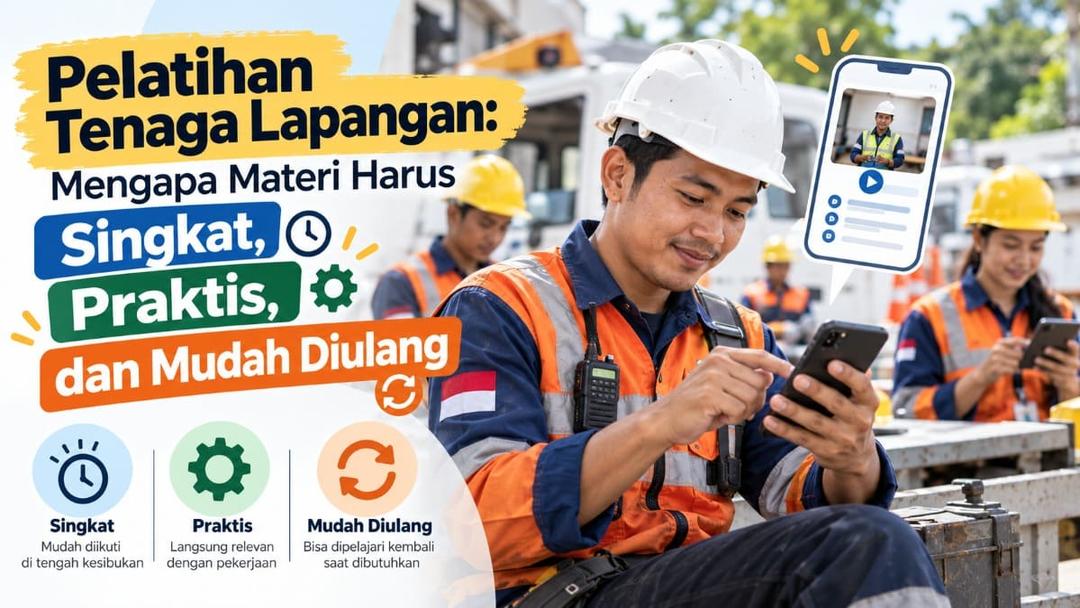
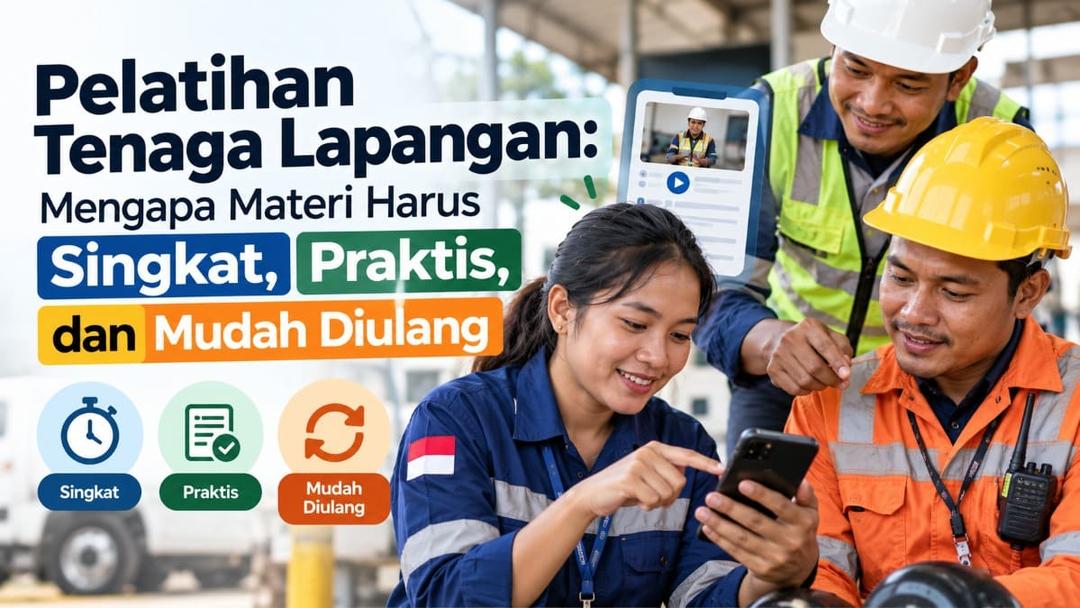
Frontline and Field Workforce Training
Frontline and field employees may not have regular access to
desktop-based learning systems. They may need short, practical guidance that
works on mobile devices.
Microlearning apps can support:
- safety
procedures
- service
standards
- operational
checklists
- product
handling
- customer
interaction scripts
- quality
control reminders
- field
reporting guidance
The key is simplicity. If the app is difficult to use,
frontline learners may avoid it.
Leadership and Behavioral Reinforcement
Leadership training often fails when it stays theoretical.
Managers may attend a workshop but forget to apply the behavior in real
situations.
Microlearning apps can reinforce leadership behaviors
through short nudges, reflection prompts, scenario questions, and practical
reminders. For example, a manager might receive a short lesson on giving
feedback before a performance review cycle.

Microlearning Apps vs Traditional Training Tools
Microlearning apps should not be evaluated only as smaller
versions of LMS platforms. Their role is different.
A traditional LMS often focuses on course management,
enrollment, compliance tracking, assessments, and structured learning pathways.
A microlearning app often focuses on access, speed, reinforcement, mobile
usage, and frequent learner interaction.
|
Aspect |
Microlearning App |
Traditional LMS / Training Tool |
|
Primary use |
Short, focused, mobile-friendly learning |
Structured courses, formal training, compliance management |
|
Learning rhythm |
Frequent, small interactions |
Longer, scheduled or module-based sessions |
|
Best suited for |
Reinforcement, updates, onboarding steps, field support |
Certification, complex courses, formal assessments |
|
Learner access |
Often mobile-first |
Often web-first, depending on platform |
|
Content format |
Short videos, cards, quizzes, checklists |
Full modules, lessons, documents, exams |
|
Admin focus |
Engagement, reminders, behavior tracking |
Enrollment, completion records, course structure |
|
Main risk |
Fragmented learning if poorly sequenced |
Low completion if modules feel too long or heavy |
|
Strategic value |
Continuous learning support |
Formal learning governance |
For many organizations, the strongest approach is not
choosing one tool and rejecting the other. The stronger approach is building a
learning ecosystem where each format has a clear role.
A corporate academy may use a traditional structure for
formal learning pathways, while using a microlearning app for weekly
reinforcement. A training provider may offer full online courses, then use
microlearning to keep learners engaged after completion. An institution may use
microlearning to support mobile access and student review, while maintaining
structured courses for deeper learning.
This is why a mobile-firstlearning platform can become strategically valuable. Mobile learning is not
just a delivery channel. It changes when and how learners interact with
training.
FitAcademy
Learn How Microlearning Apps Support Modern Workforce Training
FitAcademy helps organizations think beyond course delivery by combining microlearning, mobile access, branded learning experiences, and learning analytics into a more practical training ecosystem.
Learn More About FitAcademyWhat Organizations Should Evaluate Before Adoption
Before adopting a microlearning app, organizations should
evaluate more than content length or app design. A polished app is not enough
if the learning strategy is unclear.
The first question is learning purpose. What problem should
the app solve? Is it intended to improve onboarding, increase compliance
reinforcement, support sales readiness, reduce training friction, or create a
continuous learning culture?
The second question is learner context. Who will use the
app? Desk-based employees, field workers, managers, students, partners,
volunteers, or customers may have different access patterns and learning needs.
The third question is content workflow. Microlearning
requires consistent content production and maintenance. Short lessons are
easier to consume, but they still need planning, editing, updating, and
governance.
The fourth question is data. What should the organization
track? Completion, quiz scores, repeat access, drop-off points, lesson
popularity, mobile usage, and learner feedback can all provide useful insight.
The fifth question is integration. A microlearning app
should not become another isolated tool. It may need to connect with HR
systems, LMS records, certification workflows, internal communication channels,
or reporting dashboards.
The sixth question is ownership. If the organization wants a
branded learning experience, direct learner relationship, and better control
over learning data, then a white-label
learning platform may be more suitable than relying only on generic
third-party tools.
A microlearning app creates the most value when it is
connected to learning operations, not treated as a standalone content
container.
For institutions and corporate learning teams, this
evaluation helps prevent tool-first decisions. The goal is not simply to launch
an app. The goal is to improve learning access, consistency, engagement, and
measurable training outcomes.
How to Build a Practical Microlearning App Strategy
A practical microlearning app strategy begins with focus.
Organizations should avoid trying to convert every training program into
microlearning at once.
A better approach is to choose one high-value use case and
build from there.
For example:
- onboarding
for new employees
- product
training for sales teams
- compliance
refreshers for regulated roles
- customer
service scripts for support teams
- safety
reminders for field workers
- leadership
nudges for new managers
Once the use case is clear, the organization can define
learning objectives. Each microlearning unit should answer one specific
question or support one practical action.
A useful workflow may look like this:
- Select
a workforce training problem
- Define
the target learner group
- Break
the topic into small learning objectives
- Choose
the right content format for each objective
- Build
short lessons with clear outcomes
- Sequence
lessons into a pathway or campaign
- Add
reminders without creating notification fatigue
- Track
completion and engagement
- Review
learner behavior data
- Improve
the content and delivery rhythm
The most important part is sequencing. Microlearning should
feel like a guided experience, not a random library of short content. Learners
should understand what to complete first, what comes next, and why each lesson
matters.
A good microlearning app strategy also includes content
governance. Someone must decide when content is updated, which lessons are
retired, how feedback is reviewed, and how training quality is maintained.

Common Mistakes When Implementing Microlearning Apps
The first common mistake is assuming that shorter content
automatically creates better learning. Short lessons may improve access, but
they still need instructional clarity. A weak five-minute lesson is still weak.
The second mistake is converting long courses into short
clips without redesigning the learning experience. Microlearning is not just
video cutting. Each unit should be designed around a specific concept,
behavior, or task.
The third mistake is overusing notifications. Reminders can
support completion, but too many alerts can reduce trust. Learners may begin to
ignore the app if every message feels urgent but not useful.
The fourth mistake is launching without analytics. If the
organization does not track drop-off, completion, quiz results, or learner
feedback, it cannot improve the learning experience intelligently.
The fifth mistake is ignoring managers. In workforce
training, managers often influence whether employees take learning seriously. A
microlearning app may perform better when managers understand the training
pathway and encourage relevant application.
The sixth mistake is treating the app as separate from the
broader learning ecosystem. Microlearning should connect with formal training,
performance goals, role expectations, and organizational priorities.
|
Mistake |
Why It Creates Problems |
Better Approach |
|
Making content short but unfocused |
Learners finish without gaining useful insight |
Design each lesson around one clear outcome |
|
Cutting long videos into clips |
The content remains course-shaped, not
microlearning-shaped |
Redesign lessons for mobile-first learning |
|
Sending too many reminders |
Learners may ignore notifications |
Use reminders based on timing and relevance |
|
Ignoring analytics |
Teams cannot identify what needs improvement |
Track completion, drop-off, quiz results, and feedback |
|
Excluding managers |
Learning may not transfer into work behavior |
Give managers visibility and simple reinforcement tools |
|
Using the app as a silo |
Learning becomes fragmented |
Connect microlearning to broader training pathways |
Conclusion
The rise of microlearning apps in workforce training
reflects a practical shift in how organizations think about learning. Employees
need training that is easier to access, faster to complete, and more closely
connected to daily work. Organizations need learning systems that can support
continuous skills development, not just occasional course delivery.
Microlearning apps answer part of that need by delivering
short, focused, mobile-friendly lessons. They can support onboarding,
compliance refreshers, product updates, sales readiness, frontline training,
and leadership reinforcement.
But the app itself is not the strategy. The real value comes
from clear learning objectives, thoughtful sequencing, strong content
governance, mobile-first access, analytics, and integration with broader
workforce development goals.
For institutions and corporate learning teams, microlearning
apps are best understood as part of a larger learning infrastructure. When used
well, they can help organizations make training more consistent, more
accessible, and more aligned with the way modern employees actually learn.
FitAcademy
Create a More Flexible Workforce Learning Experience
FitAcademy supports institutions, corporate teams, and training providers that want to deliver branded, mobile-first microlearning experiences without building the entire learning infrastructure from scratch.
Learn More About FitAcademyFAQ
What is a microlearning app?
A microlearning app is a digital learning application that
delivers short, focused lessons through mobile or web access. It may include
short videos, quizzes, checklists, flashcards, reminders, and progress
tracking. In workforce training, microlearning apps are often used to support
onboarding, refreshers, product updates, compliance reinforcement, and
practical job-related learning.
Why are microlearning apps popular in workforce
training?Microlearning apps are popular because they reduce training
friction. Employees can access short lessons more easily during the flow of
work, especially when they are busy, distributed, or mobile. Organizations also
use them because training needs change quickly, and short-format learning can
be updated and delivered faster than traditional long-form programs.
Do microlearning apps replace LMS platforms?
Not always. Microlearning apps and LMS platforms often serve
different purposes. An LMS may be better for structured courses, certification,
compliance records, and formal learning pathways. A microlearning app may be
better for reinforcement, quick updates, and mobile access. Many organizations
benefit from combining both approaches inside a broader learning ecosystem.
What types of workforce training fit microlearning apps
best?Microlearning apps work well for onboarding steps,
compliance refreshers, sales enablement, software tips, safety reminders,
product updates, customer service guidance, and leadership reinforcement. They
are less suitable as the only format for complex, theory-heavy, or
certification-based programs that require deeper study and extended assessment.
How should organizations measure microlearning app
success?Organizations should measure completion, engagement, quiz
performance, repeat access, drop-off points, learner feedback, mobile usage,
and content effectiveness. Completion alone is not enough. A lesson may be
completed but still fail to improve understanding or behavior. The best
measurement approach connects learning activity with role expectations and
performance needs where possible.
What should organizations prepare before launching a
microlearning app?
Organizations should prepare
learning objectives, target learner groups, content governance, reporting
needs, role-based pathways, reminder strategy, and platform ownership
requirements. They should also decide whether the app will stand alone or
connect with existing LMS, HR, certification, or internal communication
systems.