Educational blogs help course providers and creators reach
potential learners during the early stages of a decision, often before those
people are actively comparing courses or planning to enroll. By answering
practical questions, explaining unfamiliar concepts, and helping readers
diagnose their needs, a blog can create the first meaningful interaction
between an education brand and its future audience.
The value of blogging is not limited to generating website
traffic. A well-structured educational blog can build topical authority,
support search visibility, demonstrate teaching quality, and guide readers
toward deeper resources over time. This article explains how educational blogs
influence pre-enrollment discovery, which content types are most useful, how to
design a coherent learner journey, and what education businesses should measure
without expecting every article to produce an immediate enrollment.
- Quick
Answer
- Why
Learners Search Before They Are Ready to Enroll
- What
Role Does an Educational Blog Play?
- Which
Blog Topics Attract Future Learners?
- How
Blogs Build Trust Before a Course Decision
- How
to Guide Readers Without Selling Too Early
- Building
a Blog Around the Learner Journey
- Common
Educational Blogging Mistakes
- A
Practical Blog Implementation Framework
- Conclusion
- FAQ
Quick Answer
Educational blogs attract future learners by answering
questions that appear before formal course research begins.
A person may not yet be searching for a specific program.
They may be trying to understand a professional problem, learn a basic concept,
evaluate a new skill, improve their work, or determine whether structured
training is necessary. An educational blog gives course providers and creators
a way to become visible during this early exploration.
The strongest blog content does more than publish general
information. It connects specific learner questions with clear explanations,
practical examples, related resources, and appropriate next steps. Over time,
this can help readers recognize their learning needs, understand the education
provider’s expertise, and become more prepared to evaluate a course or learning
platform.
Educational blogging is usually a long-term acquisition
strategy rather than a direct-response sales tactic. Some articles may support
lead generation or enrollment, while others primarily contribute to
discoverability, trust, and topical authority.
Its effectiveness depends on relevance. High traffic from
unrelated topics is less valuable than a smaller audience whose questions,
roles, and objectives align with the provider’s courses.

Why Learners Search Before They Are Ready to Enroll
Most learners do not begin their journey by searching for a
specific course.
They usually begin with a problem.
A freelance trainer may be struggling to turn workshop
material into an online format. A new creator may be unsure whether their
expertise can become a course. A learning manager may need to improve employee
onboarding but may not yet know whether the solution requires better content, a
new process, or a learning platform.
Their initial searches may look like this:
- How
do I structure an online course?
- Why
do learners stop completing training?
- What
is microlearning?
- How
long should an educational video be?
- How
can I track learner progress?
- What
is the difference between an LMS and a learning platform?
- How
do I move classroom training online?
- Do
online course certificates matter?
- How
do I keep learners engaged after registration?
These are not always purchase-oriented questions. They are
discovery and problem-definition questions.
A person asking what microlearning means may be months away
from selecting a platform. Another person researching how to issue certificates
may already be preparing to launch a program. Both can enter the education
brand’s audience through useful blog content, but they require different next
steps.
Learning decisions often begin with self-diagnosis
Before choosing a course, people try to understand what they
do not know.
They may ask:
- Is
my current knowledge sufficient?
- Is
this problem caused by a skill gap?
- Do
I need a short tutorial or a structured program?
- Can
I solve this independently?
- Is
the topic relevant to my role?
- How
much time will it take to learn?
- What
result should I realistically expect?
Educational blogs can support this self-diagnosis.
For example, an article about low course completion may
explain several possible causes: unclear onboarding, content overload, weak
relevance, poor mobile usability, limited feedback, or a mismatch between
learner expectations and course design.
A reader may initially assume that the problem is learner
motivation. After reading, they may realize that the deeper issue is program
structure.
That realization creates learning demand before a course is
actively considered.
Search behavior changes as readiness increases
Early searches tend to be broad and explanatory.
Later searches become more specific and operational.
A possible progression might be:
- What
is online training?
- What
makes online training effective?
- How
do I convert classroom material into online lessons?
- Which
online training platform should I use?
- Do I
need a branded learning platform?
- How
much does a white-label learning platform cost?
- How
long does implementation take?
The first questions indicate awareness. The later questions
indicate evaluation.
An education blog can support the entire progression, but
each article should have a clear role. A beginner article should not attempt to
answer every implementation and purchasing question. A decision-stage article
should not spend most of its length explaining basic definitions.
Learners often discover a course provider while researching
a problem, not while searching for a provider.
What Role Does an Educational Blog Play?
An educational blog is a structured collection of articles
that helps an organization explain its subject area, answer learner questions,
and connect public information with deeper learning opportunities.
It can support several functions at once:
- audience
discovery
- search
visibility
- problem
awareness
- learner
education
- trust
development
- topical
authority
- content
distribution
- lead
generation
- course
evaluation
- learner
onboarding
Not every article needs to perform all of these functions.
A definition article may support visibility and
understanding. A practical guide may encourage readers to download a template.
A comparison article may help prospective learners evaluate solutions. An
implementation article may support a consultation or platform inquiry.
The strategic value comes from how these articles work
together.
The blog creates an entry point into the education brand
A person may not know the course provider’s name,
instructor, or product.
They may first encounter the brand because one article
answers a specific question well.
That article becomes the first experience of the
organization’s educational quality.
Readers may evaluate:
- whether
the explanation is clear
- whether
the examples are realistic
- whether
the writer understands the learner’s problem
- whether
important limitations are acknowledged
- whether
the advice can be applied
- whether
the content feels trustworthy
- whether
the website is easy to use
This means the blog is not merely a marketing channel. It is
also a public demonstration of how the organization teaches and thinks.
The blog builds a searchable knowledge layer
Courses are usually designed around a defined learning
sequence. Search behavior is less orderly.
People may enter through any question, at any level of
readiness.
A blog allows the education business to create multiple
entry points around:
- definitions
- challenges
- comparisons
- implementation
methods
- mistakes
- examples
- tools
- operational
decisions
- strategic
considerations
These entry points can later guide readers toward more
structured learning.
A course might begin with a carefully designed Module 1. A
blog reader may arrive through an article related to Module 7 because that is
the problem they currently face.
The blog must accommodate this non-linear discovery.
The blog supports long-term audience development
A blog article can remain useful after the initial
publication period.
Unlike a social post that may disappear quickly from an
active feed, a relevant article can continue to receive search visits,
referrals, internal link traffic, and direct sharing.
However, this value depends on maintenance.
Articles may require updates when:
- terminology
changes
- software
interfaces change
- search
intent shifts
- regulations
are revised
- platform
capabilities evolve
- internal
links become outdated
- examples
no longer reflect current practice
Educational content should be treated as a maintained
knowledge asset rather than a one-time publishing task.
The blog can reduce premature sales pressure
Some education businesses direct almost every visitor toward
a purchase, consultation, or demo.
That may work for highly ready prospects, but it does not
serve people who are still learning about the problem.
A blog creates intermediate steps.
Readers can:
- learn
a concept
- compare
approaches
- explore
related questions
- download
a planning resource
- watch
a short lesson
- join
a webinar
- assess
their readiness
- subscribe
to relevant updates
This allows the relationship to develop without requiring an
immediate commitment.
A strong educational blog gives future learners a useful place to begin before asking them to decide where to enroll.
Which Blog Topics Attract Future Learners?
The most effective blog topics sit close enough to the
learning offer to attract a relevant audience, but early enough to reach people
who are not yet actively comparing courses.
This requires a balance between reach and alignment.
A broad topic may attract more visitors. A specific topic
may attract fewer but more relevant readers.
|
Topic type |
Example |
Learner stage |
Primary value |
|
Definition |
What Is Microlearning? |
Early awareness |
Introduces an unfamiliar concept |
|
Problem diagnosis |
Why Learners Stop Completing Online Courses |
Problem awareness |
Helps readers understand the cause of a challenge |
|
Practical guide |
How to Structure a Short Online Lesson |
Active exploration |
Helps the reader complete a specific task |
|
Comparison |
Live Cohort Learning vs Self-Paced Courses |
Consideration |
Clarifies differences and trade-offs |
|
Mistake-based |
Common Course Onboarding Mistakes |
Problem awareness |
Reveals preventable operational issues |
|
Readiness content |
Is Your Training Program Ready to Move Online? |
Consideration |
Helps readers evaluate their current situation |
|
Implementation |
How to Launch a Branded Online Academy |
Decision exploration |
Supports planning and solution evaluation |
|
Measurement |
How to Track Learner Progress and Completion |
Improvement |
Connects delivery with operational performance |
Definition content creates conceptual awareness
Definition articles explain a term clearly enough for a
beginner while preserving important nuance.
Examples include:
- What
is blended learning?
- What
is a white-label learning platform?
- What
is mobile learning?
- What
is cohort-based learning?
- What
is learner engagement?
- What
is an online academy?
- What
is learning analytics?
These articles can attract broad audiences, but they should
connect the concept to a practical context.
An article defining microlearning should not stop at
describing short content. It should explain when microlearning is appropriate,
how it relates to practice and assessment, and why dividing long videos into
smaller clips does not automatically produce an effective learning experience.
Problem-based content reaches readers experiencing friction
Problem-based articles are often more commercially relevant
because they attract people who are already aware that something is not
working.
Examples include:
- Why
learners register but never begin
- Why
course completion declines after the first week
- Why
online training feels difficult to manage
- Why
educational content receives traffic but no leads
- Why
learners struggle to understand video lessons
- Why
training reports take too long to prepare
These topics allow the provider to demonstrate diagnostic
ability.
The article should avoid reducing complex problems to one
cause. Low completion, for example, may result from weak relevance, difficult
access, excessive workload, poor onboarding, scheduling conflicts, or limited
support.
Task-based guides attract active learners and practitioners
Practical guides are useful when readers are trying to
complete a specific job.
Examples include:
- how
to write learning outcomes
- how
to create a course outline
- how
to divide training into microlearning modules
- how
to design a learner onboarding flow
- how
to prepare a course landing page
- how
to choose assessment methods
- how
to create a training content calendar
These readers may not be ready to buy a complete program,
but their behavior shows active involvement in the topic.
A practical guide can lead naturally to a template, sample
lesson, checklist, or deeper course.
Comparison content supports solution evaluation
Comparison articles become valuable when the reader already
understands the basic problem and is considering different approaches.
Examples include:
- online
course marketplace versus branded platform
- self-paced
learning versus cohort learning
- mobile
app versus web-based training
- white-label
platform versus custom development
- live
webinars versus recorded microlearning
- free
course versus paid course
- certificates
versus demonstrated skill evidence
The article should explain where the options overlap, how
they differ, and under which conditions each may be appropriate.
Declaring one option universally better can reduce
credibility.
Strategic content reaches decision-makers
Course providers and creators are not always the only
readers.
Training managers, institution leaders, program directors,
community managers, and organizational buyers may search for broader questions
such as:
- how
to scale training across regions
- how
to standardize learning delivery
- how
to manage several instructors
- how
to track learner outcomes
- how
to build a branded learning ecosystem
- how
to move offline programs into blended delivery
These articles may receive less traffic than beginner
tutorials, but they can attract readers with authority over larger
implementation decisions.

How Blogs Build Trust Before a Course Decision
Trust in education is not created by visibility alone.
A potential learner may find a provider through search but
still know very little about the quality of the course, the teaching method, or
the provider’s understanding of real learner problems.
Blog content can reduce this uncertainty.
Clear explanations demonstrate teaching ability
A course provider makes a promise about learning.
The blog offers public evidence of whether the provider can
explain a subject clearly.
A reader may reasonably assume that a provider who produces
confusing, shallow, or generic public content could offer a similarly weak paid
experience.
The opposite is also true. A well-written article can
demonstrate:
- subject
knowledge
- logical
organization
- awareness
of learner misconceptions
- ability
to explain technical terms
- practical
judgment
- realistic
expectations
- respect
for complexity
This does not prove that the paid course is effective, but
it gives the reader meaningful evidence to evaluate.
Specificity signals real experience
Generic educational claims are easy to publish.
Statements such as “engagement is important” or “technology
improves learning” reveal very little.
Specific explanations are more credible.
For example:
“Sending a welcome email does not guarantee that learners
understand how to begin. Onboarding should clarify account access, course
structure, expected weekly effort, available support, assessment requirements,
and the first action the learner should complete.”
This explanation shows operational understanding.
Specificity helps readers distinguish between content
written for search visibility and content informed by actual learning delivery.
Caveats make educational claims more believable
Education outcomes depend on multiple factors.
A blog should avoid implying that one tool, format, or
technique automatically improves learning.
Microlearning may improve accessibility and reduce content
overload, but it is not suitable for every objective. A mobile application may
improve access for some audiences, but only when the experience works on the
devices and connectivity conditions those learners actually use.
Including limitations does not weaken the article.
It shows that the provider understands implementation
conditions.
Consistency strengthens authority over time
One strong article can create a positive first impression.
A connected body of articles creates stronger evidence.
If a provider publishes useful content across course design,
learner onboarding, engagement, assessment, mobile delivery, analytics, and
platform strategy, readers can see that the organization understands the
broader learning ecosystem.
This is also valuable for topical authority.
Search engines and AI systems can more easily associate the
brand with a subject when the website contains consistent, well-connected
coverage rather than isolated articles.
Internal links reveal depth
Internal linking helps readers move from a broad question
toward more specific knowledge.
For example, an awareness article about educational content
can link to:
- how
to turn free educational content into qualified leads
- how
to measure content, visibility, and enrollment performance
- a
guide to course landing pages
- an
explanation of branded learning platforms
- a
practical implementation checklist
These links should extend the reader’s understanding rather
than serve as repetitive keyword placement.
Trust grows when the free content demonstrates the same
clarity, relevance, and practical judgment that the learner expects from the
paid experience.
How to Guide Readers Without Selling Too Early
An educational blog should support progression, but not
every page should force a conversion.
The appropriate next step depends on the reader’s stage and
the article’s role.
Use content depth as the first progression path
The simplest next step is often another relevant article.
A reader exploring microlearning may continue to:
- examples
of microlearning formats
- how
to divide a lesson into short modules
- when
microlearning is not suitable
- how
to assess short learning modules
- how
mobile-first delivery affects content design
This approach is useful for early-stage readers who still
need understanding rather than a sales conversation.
Offer practical resources when intent becomes clearer
A downloadable resource may be appropriate when the reader
is attempting a task.
For example:
- lesson
planning template
- course
readiness checklist
- training
platform requirements worksheet
- learner
onboarding checklist
- content
audit template
- course
launch calendar
The resource should extend the article rather than repeat it
in a different format.
A person reading about course structure may value a
worksheet that helps organize their own objectives, modules, practice, and
assessment.
Use sample learning experiences to demonstrate value
A sample module can provide a more realistic transition from
content consumption to structured learning.
The sample might contain:
- a
short lesson
- one
practical exercise
- a
quiz
- a
reflection prompt
- a
downloadable tool
- a
progress indicator
This gives potential learners an opportunity to evaluate not
only the information but also the learning design.
A branded sample experience can be especially useful for
creators or training providers using a white-label
learning platform, because the visitor can experience the environment in
which the full program will be delivered.
Match the CTA to the article’s intent
A broad awareness article should normally use a low-pressure
CTA.
Appropriate actions may include:
- learn
more
- read
the next guide
- explore
related topics
- download
a checklist
- watch
a short lesson
- assess
program readiness
Decision-stage content may use a more direct CTA, such as:
- compare
platform options
- review
implementation requirements
- explore
pricing
- request
a consultation
- begin
a trial
The CTA should reflect the distance between the current
question and the eventual decision.
|
Reader stage |
Suitable blog content |
Appropriate next action |
|
Early awareness |
Definitions and introductory explanations |
Read a related guide |
|
Problem awareness |
Diagnostic and mistake-based articles |
Use a checklist or assessment |
|
Active exploration |
Practical guides and frameworks |
Download a template or join a webinar |
|
Consideration |
Comparisons and readiness content |
Explore a sample lesson or course overview |
|
Decision exploration |
Implementation, pricing, and platform content |
Request details or discuss requirements |
Avoid disguising sales messages as education
Readers notice when an article exists only to promote a
product.
An educational article should answer the question it
promises to answer.
The provider may explain where a platform, course, or
service becomes relevant, but the explanation should include conditions and
alternatives.
For example, a small creator with one course may manage
adequately with a website, email tool, and standard course platform. A
white-label environment becomes more relevant when the creator needs stronger
brand control, integrated learner data, mobile access, several programs, or a
longer-term learner ecosystem.
This type of qualification makes the CTA more credible.
FitAcademy
Connect Your Educational Content With a Deeper Learning Experience
FitAcademy helps creators and training providers continue the learner journey beyond public articles through branded microlearning, course delivery, learner registration, progress tracking, quizzes, certificates, and mobile-first access.
Learn More About FitAcademyBuilding a Blog Around the Learner Journey
A blog becomes more effective when its structure reflects
how learner understanding develops.
Publishing unrelated articles may produce occasional
traffic, but it does not create a coherent path.
Begin with a central subject area
Choose a subject closely connected to the education
business.
For a course creation platform, the central area might be:
“Building and operating online learning programs.”
Supporting areas could include:
- course
strategy
- instructional
design
- content
production
- learner
engagement
- delivery
technology
- monetization
- learning
analytics
- program
operations
- branded
platforms
The subject should be broad enough to support multiple
questions but narrow enough to remain relevant to the business.
Organize content into clusters
A topic cluster is a group of related articles covering
different aspects or intents within one subject.
For example:
Macro topic: Education business conversion
Supporting articles:
- How
educational blogs attract future learners
- How
free educational content creates qualified leads
- How
education businesses measure visibility and enrollment
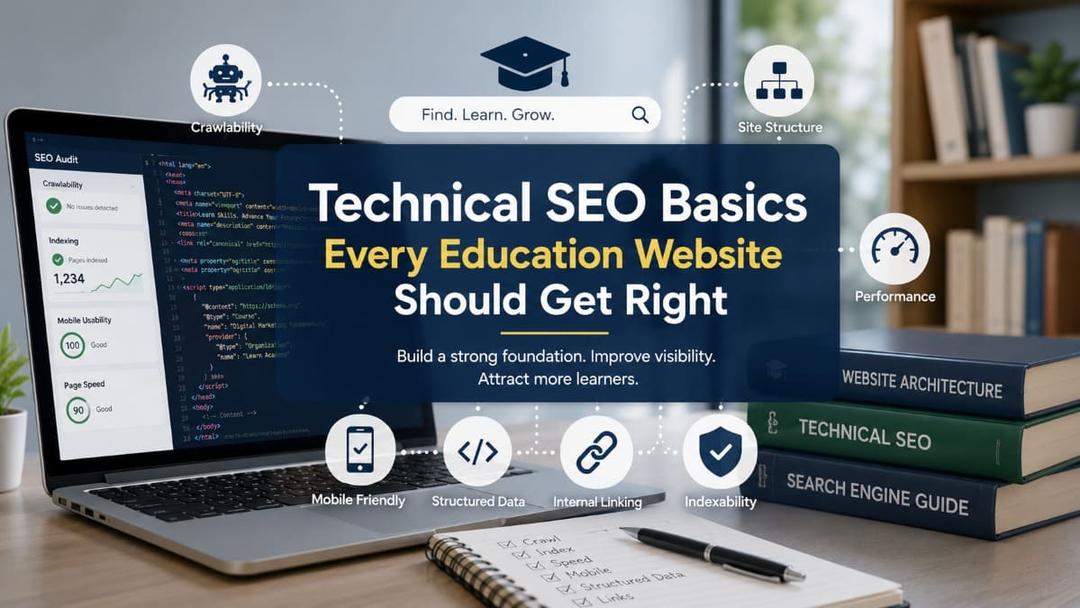
- Technical
SEO basics for education websites
The articles serve different stages while reinforcing the
same broader theme.
This allows the blog to cover awareness, consideration,
implementation, and improvement without forcing one article to answer
everything.
Map articles to learner questions
Each article should answer a distinct primary question.
A practical content map might include:
Awareness questions:
- What
is the concept?
- Why
does it matter?
- What
problem does it address?
Problem questions:
- Why
is the current approach not working?
- What
causes the issue?
- What
is commonly misunderstood?
Consideration questions:
- Which
approach should I choose?
- What
are the trade-offs?
- Am
I ready for this solution?
Decision questions:
- What
will implementation require?
- What
does it cost?
- Which
features matter?
- What
should I verify?
Improvement questions:
- How
should performance be measured?
- Where
is the current bottleneck?
- What
should be optimized first?
Create intentional internal pathways
Internal links should guide readers according to their
likely next question.
An article about why learners leave courses might link to:
- onboarding
design
- learner
support systems
- progress
tracking
- mobile
usability
- course
structure
The links should not all lead directly to a product page.
A balanced internal pathway often includes:
- one
broader pillar article
- one
or two related guides
- one
practical resource
- one
relevant solution page
Maintain clear differentiation between articles
Content overlap is common when several articles cover
related subjects.
For example:
- “How
blogs attract learners” should focus on early discovery and trust.
- “How
free content generates leads” should focus on conversion and
qualification.
- “How
to measure performance” should focus on metrics and optimization.
- “Technical
SEO basics” should focus on crawling, indexing, performance, and site
structure.
These articles can link to each other without repeating the
same discussion.
Build continuity beyond the blog
A blog should connect with the rest of the learning
ecosystem.
The reader may progress from:
- Search
result
- Blog
article
- Related
guide
- Downloadable
resource
- Email
sequence
- Sample
microlearning module
- Course
page
- Registration
- Learner
onboarding
- Full
learning program
The experience does not need to be fully automated at the
beginning.
What matters is that the transitions are intentional and
that the reader does not reach a dead end.

Common Educational Blogging Mistakes
Educational blogging often underperforms because the
publishing activity is disconnected from learner needs, course strategy, or
website operations.
Writing only about the provider’s products
Potential learners usually search for their own questions,
not for internal product terminology.
A blog containing only feature announcements, company news,
and promotional explanations may serve existing users but attract few new
learners.
Product content has a place, particularly during
consideration and decision stages. It should exist alongside genuinely
educational material.
Targeting broad traffic with weak course relevance
A course provider may publish general productivity,
motivation, or career content because these topics appear popular.
The resulting traffic may not align with the programs being
sold.
A creator teaching advanced instructional design is unlikely
to build a qualified audience through generic articles about working from home
unless there is a clear connection.
Topic relevance should be evaluated before potential traffic
volume.
Publishing isolated articles without a cluster
An individual article may rank or attract shares, but
isolated content gives readers few reasons to continue exploring.
A stronger approach connects each article with:
- a
broader subject
- related
questions
- a
learner stage
- a
relevant next step
- an
appropriate offer
This improves both navigation and topical coherence.
Treating the blog as a complete course
Blog content and course content serve different functions.
A blog is usually non-linear. Readers enter through
individual questions and move according to their interests.
A course should provide a deliberate learning sequence,
outcomes, practice, feedback, assessment, or support.
Publishing long articles does not automatically replace the
need for structured learning design.
Publishing generic AI-generated content without editorial depth
Generating large quantities of content can create the
appearance of topic coverage.
However, articles that repeat common statements, avoid
practical detail, or fail to make meaningful distinctions may not help readers.
Education content should reflect:
- actual
learner questions
- operational
examples
- realistic
constraints
- subject
terminology
- practical
decisions
- clear
editorial judgment
AI-assisted production may support research, outlining,
editing, or repurposing, but knowledgeable human review remains important.
Ignoring the website experience
Useful content can still fail when the website is difficult
to access.
Common problems include:
- slow
loading
- poor
mobile readability
- intrusive
pop-ups
- broken
internal links
- unclear
navigation
- inaccessible
forms
- unreadable
typography
- missing
metadata
- indexing
problems
- confusing
URL structures
Content quality and technical quality work together.
The operational foundations are discussed further in technical
SEO basics every education website should get right.
Expecting every article to produce immediate enrollment
Awareness articles often influence future decisions rather
than direct conversions.
A reader may discover the brand through an article, return
several weeks later through a branded search, attend a webinar, and enroll
after a recommendation.
Evaluating the first article only by direct sales would
understate its role.
Education businesses should measure article performance
according to purpose, including discovery, engagement, assisted progression,
leads, or enrollment where appropriate.
The blog’s job is not to make every reader enroll today. Its job is to make the next relevant learning decision easier.
A Practical Blog Implementation Framework
Course providers and creators can begin with a focused blog
system rather than an aggressive publishing schedule.
Step 1: Define the learner group
Avoid writing for “everyone who wants to learn.”
Specify:
- role
- experience
level
- problem
- objective
- learning
context
- potential
barriers
For example:
“Independent trainers who already deliver offline workshops
and want to create a structured online or blended program.”
This audience definition produces more useful topic
decisions.
Step 2: Identify pre-enrollment questions
List what this audience asks before considering a course.
For the trainer example, questions may include:
- Can
workshop material be reused online?
- How
should long sessions be divided?
- Which
content format is necessary?
- How
can practice be included?
- How
should participants be monitored?
- Do
learners need an app?
- How
much content should be produced before launch?
- How
can certificates be managed?
These questions become potential articles.
Step 3: Group questions by intent
Separate the topics into:
- awareness
- problem
awareness
- practical
exploration
- comparison
- decision
- improvement
This prevents the blog from becoming a collection of similar
beginner articles.
Step 4: Select one focused cluster
Begin with three to five connected articles.
For example:
- What
Is Blended Learning?
- How
to Convert Offline Training Into Blended Learning
- Common
Mistakes When Moving Training Online
- How
to Choose a Platform for Blended Training
- How
to Measure Learner Participation in a Blended Program
This cluster creates a natural progression.
Step 5: Give every article a specific role
Document:
- primary
question
- intended
audience
- learner
stage
- central
takeaway
- internal
links
- primary
CTA
- success
metric
An awareness article may prioritize organic discovery and
related-article clicks. A practical guide may prioritize template downloads. A
decision article may prioritize platform exploration.
Step 6: Build the internal link structure before publishing
Decide how the articles will connect.
Do not wait until dozens of articles exist.
A simple structure might include:
- introductory
article linking to practical guides
- practical
guides linking to comparisons
- comparisons
linking to implementation content
- all
relevant pages linking to one central pillar
- decision-stage
pages linking to an appropriate solution
Step 7: Add one useful next step
Do not add several competing CTAs.
Choose the action most appropriate to the article:
- read
the next guide
- download
a worksheet
- join
a short webinar
- assess
readiness
- explore
a sample module
- learn
about a platform
Step 8: Connect blog content with learning content
Identify articles that can become:
- microlearning
lessons
- webinar
segments
- email
sequences
- course
previews
- onboarding
resources
- instructor
discussion prompts
- learner
support articles
This improves content reuse without assuming that a blog
article can simply be copied into a course.
Learning content usually requires clearer outcomes,
sequence, interaction, practice, and assessment.
Step 9: Review performance by topic and intent
Track:
- relevant
search visibility
- article
visits
- related-content
clicks
- repeat
visitors
- resource
downloads
- sample
lesson starts
- qualified
leads
- assisted
enrollments
Performance should be reviewed over a meaningful period.
Search-based content may need time to gain visibility, particularly on a new or
low-authority website.
Step 10: Update what proves useful
Content maintenance should prioritize articles that:
- attract
relevant audiences
- answer
important learner questions
- support
course evaluation
- receive
external references
- generate
internal navigation
- contain
outdated examples
- have
declining visibility
- contribute
to leads or assisted enrollment
The goal is not to preserve every article indefinitely. It
is to maintain a useful and coherent knowledge base.

Conclusion
Educational blogs attract future learners by meeting them
before formal course evaluation begins.
At this stage, readers are usually trying to understand a
concept, diagnose a problem, complete a task, or decide whether deeper learning
is necessary. A useful blog gives them a credible place to begin.
The strategic value is broader than traffic.
A connected body of educational content can demonstrate
teaching quality, build topical authority, create search visibility, support
audience development, and guide readers toward more structured resources. It
can also help potential learners clarify what they need before they compare
courses, providers, or learning platforms.
This process requires patience.
Not every article will generate a lead, and not every reader
is supposed to enroll immediately. Awareness content often contributes
indirectly by creating the first trusted interaction, supporting future branded
searches, or preparing readers to understand a later offer.
Course providers and creators should therefore design the
blog as part of the wider learner journey.
Public articles can answer early questions. Templates and
assessments can support active exploration. Sample lessons can demonstrate the
learning experience. A course or branded platform can then provide structure,
progress, practice, feedback, and longer-term engagement.
When these elements are connected, the blog becomes more
than a publishing channel. It becomes the public entrance to the education
business’s learning ecosystem.
FitAcademy
Extend Your Educational Content Into Structured Learning
FitAcademy helps creators and training providers turn public educational interest into branded mobile-first learning experiences with microlearning, course delivery, learner progress, quizzes, certificates, and ongoing engagement.
Learn More About FitAcademyFAQ
Can an educational blog generate course enrollments?
Yes, but the effect is often indirect. A blog may introduce
the provider, answer early questions, build trust, or guide readers toward a
resource or sample lesson. Some decision-stage articles may generate direct
enrollment, while awareness articles are more likely to assist later
conversions.
What should a new education blog write about first?
A new blog should begin with questions closely connected to
its target learners and learning offers. Start with one focused cluster
containing definitions, common problems, practical guidance, and a
consideration-stage article. Avoid selecting topics only because they have
broad traffic potential.
How often should an education business publish blog articles?
There is no universal publishing frequency. A sustainable
schedule that produces accurate, useful, and connected articles is more
valuable than frequent shallow publishing. Smaller teams may begin with two to
four strong articles per month while maintaining and internally linking
existing content.
Should blog articles teach the same material as a paid course?
They can cover related concepts, but they serve different
purposes. Blog articles answer individual questions and support discovery. Paid
courses should provide a structured sequence, practice, feedback, assessment,
support, or accountability. The paid value should not depend on deliberately
withholding basic information.
How long does it take for an educational blog to attract learners?
The timeline varies according to website authority, topic
competition, content quality, distribution, technical performance, and audience
demand. Some articles may generate referral or social traffic quickly, while
search visibility may develop gradually. Education businesses should evaluate
progress over months rather than expecting immediate enrollment from every
article.
Does an education business need its own platform to benefit from blogging?
No. A website, email tool, and existing course system may be
sufficient for a small operation. A branded learning platform becomes more
relevant when the provider wants to connect public content with sample modules,
registrations, structured courses, progress tracking, certificates, and
longer-term learner relationships.