Many organizations are rethinking the role of learning
technology. Traditional LMS platforms are still useful for hosting courses,
assigning content, and tracking completion. But as education, workforce
training, creator-led learning, and professional communities become more
strategic, organizations increasingly need more than a course delivery tool.
They need branded learning ecosystems that support learner relationships,
mobile access, data visibility, monetization, content operations, and long-term
audience ownership. This article explains why the shift from LMS platforms to
white-label learning ecosystems is happening, what it means for institutions
and training providers, and how organizations can think more strategically
about their learning infrastructure before choosing their next platform.
- Quick
Answer
- The
LMS Was Built for Administration, Not Always for Ecosystem Growth
- Why
Learning Is Becoming a Strategic Infrastructure Decision
- What
a White-Label Learning Ecosystem Changes
- LMS
Platform vs White-Label Learning Ecosystem
- Why
Organizations Want More Control Over Brand, Data, and Learner
Relationships
- Practical
Signs an Organization Is Outgrowing a Standard LMS
- Common
Mistakes When Moving Beyond an LMS
- How
Organizations Can Approach the Transition
- Conclusion
- FAQ
Quick Answer
Organizations are moving from traditional LMS platforms to
white-label learning ecosystems because learning is no longer only about
uploading courses and tracking completion. Many institutions, training
providers, creators, and corporate learning teams now need branded learning
experiences, mobile-first access, deeper learner engagement, better data
visibility, and more control over how education is delivered and monetized.
A standard LMS can be effective for internal course
management, compliance training, and structured learning administration.
However, when an organization wants to build its own education brand, serve
external audiences, create paid programs, manage communities, or own the
learner relationship, a white-label learning platform may offer a more
strategic foundation.
The shift does not mean every LMS is outdated. It means
platform choice increasingly depends on the organization’s business model,
audience strategy, operational maturity, and long-term learning goals. For many
organizations, the question is no longer “Where can we host our courses?” but
“What kind of learning ecosystem do we want to build?”

The LMS Was Built for Administration, Not Always for Ecosystem Growth
For many years, the learning management system has been the
default technology layer for online education and training. It helped
organizations move from classroom-only delivery to digital course management.
In that role, the LMS solved a real operational problem: it gave teams a place
to upload learning materials, enroll learners, assign courses, monitor
progress, and document completion.
That administrative foundation still matters. Schools,
companies, training providers, and public institutions continue to need
structured learning records, content access control, assessment tracking, and
reporting. For compliance training, internal onboarding, and formal education
delivery, an LMS can still be a practical tool.
The challenge appears when learning becomes more than
administration.
An organization may begin with simple online course
delivery, but over time the expectations grow. Learners expect mobile access.
Teams want analytics beyond completion. Creators want monetization.
Institutions want branded experiences. Communities want ongoing engagement.
Training businesses want to sell programs directly. Corporate learning teams
want to connect learning with capability-building, not just course assignment.
At that point, the limitations of a traditional LMS become
more visible.
The issue is not always that the LMS lacks features. Many
LMS products have expanded significantly. The deeper issue is that the
organization’s learning strategy may have evolved beyond a course-management
mindset. It now needs a more connected learning ecosystem.
An LMS is often chosen to manage learning. A white-label
learning ecosystem is usually considered when the organization wants to build,
own, and scale a learning experience.
This distinction is important because the platform decision
affects more than software operations. It influences brand perception, learner
engagement, data ownership, content workflow, monetization options, and how
easily the organization can develop new learning products.
Why Learning Is Becoming a Strategic Infrastructure Decision
Digital learning has become part of how organizations build
capability, deliver value, and maintain relationships with their audiences.
This applies across many sectors.
Educational institutions use online learning to extend
access beyond classrooms. Corporate learning teams use digital training to
support onboarding, compliance, reskilling, and leadership development.
Training providers use online platforms to package and sell expertise. Creators
and coaches use structured learning products to move beyond social media
content. Communities use learning programs to strengthen member engagement.
As these use cases expand, learning technology becomes
infrastructure.
Infrastructure is different from a tool. A tool solves a
task. Infrastructure supports a system. When learning becomes infrastructure,
the platform must support content, users, access, analytics, engagement,
branding, payment, mobile experience, and operational workflows together.
This is one reason white-label learning platforms are
becoming more relevant. They allow organizations to deliver learning under
their own brand while using an existing technology foundation. Instead of
building every technical component from scratch, an organization can launch a
branded learning environment with more control than a generic marketplace or
shared platform typically allows.
This direction aligns with broader digital education
conversations. The European Commission’s Digital Education Action Plan
emphasizes high-quality, inclusive, and accessible digital education as
education and training systems adapt to the digital age. European
Commission Digital Education Action Plan. UNESCO has also highlighted the
importance of safe, inclusive, and well-governed digital learning platforms,
particularly where education access and learner protection matter. UNESCO
guidance on digital learning platforms
For business readers, the implication is practical: platform
choice increasingly shapes the operating model of learning.
A small academy may only need a place to host courses today.
But if it wants to build a recognizable education brand, sell programs, manage
cohorts, issue certificates, analyze learner behavior, and maintain direct
communication with learners, the platform becomes part of its growth
architecture.
The more strategic learning becomes, the more important platform ownership becomes.
What a White-Label Learning Ecosystem Changes
A white-label learning ecosystem changes the relationship
between the organization, the platform, and the learner.
In a standard LMS setup, the platform is often treated as a
back-office system. It supports course administration and user tracking. The
learner may experience it as a functional portal rather than a branded
education environment.
In a white-label learning ecosystem, the platform becomes
part of the organization’s identity. The learning experience can carry the
organization’s brand, content structure, user journey, communication style, and
business model. This matters when learning is not only internal training, but
also a product, service, community benefit, or strategic channel.
For FitAcademy’s context, this is where white-label learning
infrastructure becomes especially relevant. A branded platform can support
institutions, creators, training providers, and organizations that want to
offer digital learning without building the entire system independently. It can
also connect naturally with microlearning, mobile learning, and modular content
delivery.
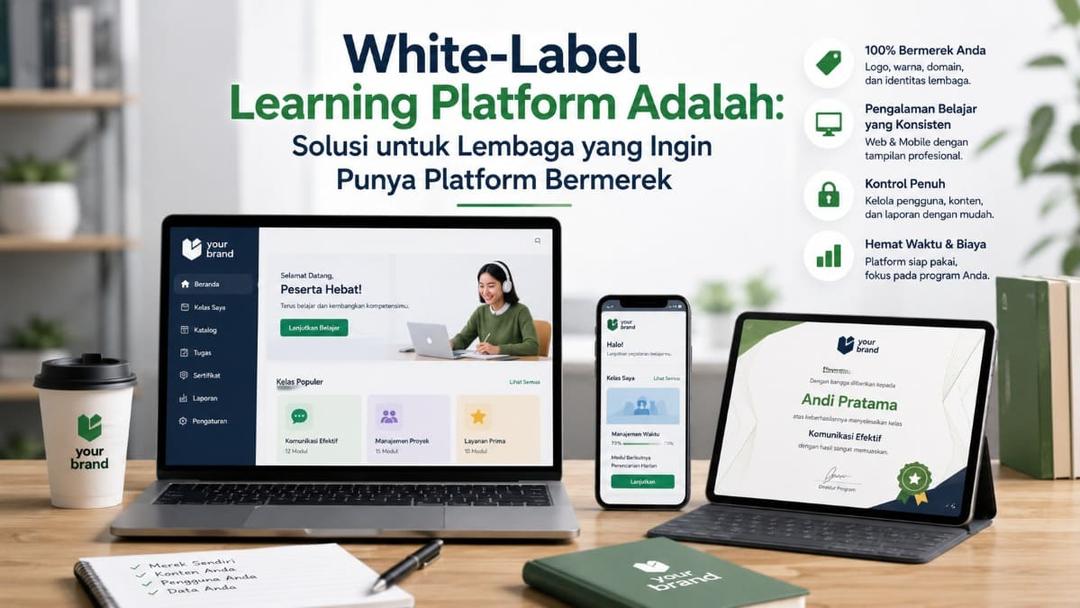
White-label does not simply mean adding a logo. That is a
common misunderstanding. A meaningful white-label platform should help the
organization create a more coherent learning environment, including:
- branded
learner access
- structured
course or module delivery
- mobile-first
learning experience
- learner
progress visibility
- content
publishing workflows
- analytics
and reporting
- monetization
options where relevant
- scalable
user management
- potential
integration with existing systems
The value depends on implementation. A white-label platform
will not automatically improve learning outcomes, learner retention, or
revenue. Those outcomes depend on content quality, instructional design,
marketing, learner support, platform usability, and operational discipline.
But the platform can create the foundation for those
efforts.

LMS Platform vs White-Label Learning Ecosystem
The shift from LMS to white-label learning ecosystem is
easier to understand when comparing the typical strategic role of each model.
|
Aspect |
Traditional LMS Platform |
White-Label Learning Ecosystem |
|
Primary role |
Course management and learning administration |
Branded learning delivery and ecosystem growth |
|
Brand control |
Often limited to basic customization |
Stronger brand ownership across the learner experience |
|
Learner relationship |
Usually platform-mediated or internally managed |
More direct relationship between organization and learner |
|
Best fit |
Internal training, compliance, academic course delivery |
Institutions, training businesses, creators, communities,
and organizations building branded education |
|
Data visibility |
Depends on LMS reporting structure |
Can be designed around learner analytics, engagement, and
business metrics |
|
Monetization |
May be limited or require add-ons |
More suitable for paid programs, memberships,
certificates, or creator-led learning models |
|
Mobile experience |
Varies by provider |
Often prioritized when designed as a modern learning
ecosystem |
|
Strategic value |
Operational efficiency |
Audience ownership, learning scalability, and branded
education infrastructure |
|
Implementation complexity |
Usually lower for basic use cases |
Requires clearer planning around brand, content, users,
and operations |
|
Main risk |
Treating learning as a static repository |
Treating white-label as only cosmetic branding |
This comparison does not mean one model is always better. A
traditional LMS may still be the right choice for an organization that
primarily needs structured internal training, formal records, and
straightforward course administration.
The white-label model becomes more relevant when learning is
tied to audience development, market positioning, monetization, external
training delivery, or long-term learner engagement.
For example, a corporate learning team may use an LMS
effectively for employee compliance training. But a professional training
provider selling leadership programs to external clients may need a branded
platform that supports marketing, learner onboarding, mobile access,
certificates, and a more premium learner experience.
A university extension program, creator academy, industry
association, or workforce development initiative may face a similar question.
If the learning experience represents the organization’s public-facing value,
platform ownership becomes more important.
FitAcademy
Learn How Branded Learning Infrastructure Supports Scalable Education
FitAcademy helps organizations understand how white-label learning infrastructure can support branded programs, mobile-first learning, microlearning delivery, and long-term education growth.
Learn More About FitAcademyWhy Organizations Want More Control Over Brand, Data, and Learner Relationships
One of the strongest reasons organizations move beyond a
standard LMS is control.
Control does not mean owning every line of software code. It
means having enough authority over the learning environment to shape the
learner experience, understand learner behavior, and build a sustainable
relationship with the audience.
Brand control matters because learning is increasingly part
of reputation. When learners join a course, certification, academy, or
professional development program, they are not only consuming content. They are
experiencing the organization’s promise. A generic platform experience can
weaken that connection, especially when the organization is trying to build
trust, loyalty, or premium positioning.
Data control matters because learning decisions depend on
visibility. Completion rates alone rarely tell the full story. Organizations
may need to understand which modules create drop-off, which learners are
engaged, which topics generate demand, and how learning behavior connects with
program outcomes.
Data governance is also increasingly important. OECD
analysis on digital education has emphasized the role of data and technology
governance in building trust in digital learning ecosystems. OECD
data and technology governance in digital education. UNESCO has also
published technical guidance related to personal data security for online
education platforms. UNESCO
personal data security guide for online education platforms
For organizations, this means platform selection should
include questions such as:
- What
learner data can we access?
- How
is learner privacy handled?
- Can
we analyze engagement beyond course completion?
- Can
we export or integrate data when needed?
- Who
owns the learner relationship?
- How
much control do we have over user communication?
Learner relationship control matters because education often
works best when the relationship continues after one course. A learner may
begin with one module, then join a program, certification, community, coaching
pathway, or advanced course. If the platform does not support long-term
relationship-building, the organization may struggle to turn one-time learning
into an ongoing ecosystem.
The strategic value of a learning platform is not only
measured by how many courses it can host, but by how well it helps an
organization understand and serve its learners over time.

Practical Signs an Organization Is Outgrowing a Standard LMS
Organizations do not always need to replace their LMS.
Sometimes they only need better content design, improved learner communication,
cleaner reporting, or more consistent administration.
However, there are practical signs that the organization may
be outgrowing a standard LMS approach.
The first sign is brand friction. If learners regularly feel
they are being sent to a third-party system rather than entering the
organization’s own learning environment, the platform may be weakening the
brand experience. This is especially relevant for paid programs, professional
certifications, creator academies, and public-facing education initiatives.
The second sign is audience fragmentation. The organization
may have course content in one place, learner communication elsewhere, payments
in another system, community engagement on a separate platform, and analytics
scattered across multiple dashboards. This creates operational friction and
makes it harder to understand the learner journey.
The third sign is limited mobile learning experience. Many
learners now expect to access education from mobile devices, especially for
short lessons, reminders, community-based learning, field training, or flexible
professional development. If the LMS experience feels too desktop-centric,
participation may suffer depending on the audience and learning context.
The fourth sign is monetization complexity. Training
providers, coaches, academies, and creators often need more than course access.
They may need paid programs, bundled learning paths, memberships, certificates,
affiliate or partner models, and repeat purchase pathways. A traditional LMS
may support some of this, but not always as a core business workflow.
The fifth sign is weak insight into learner behavior. When
the platform only reports enrollment and completion, decision-makers may
struggle to improve the learning experience. They need to know where learners
disengage, which content performs well, how cohorts behave, and which programs
create business value.
This is where related concepts such as mobile-first learning
strategy, microlearning platform design,
and learning analytics for online training become important. A white-label
ecosystem is most useful when it supports the broader operating model, not only
the visual brand.
A platform upgrade should solve an operating problem, not just create a more polished login page.
Common Mistakes When Moving Beyond an LMS
The move from an LMS to a white-label learning ecosystem can
be valuable, but only when handled strategically. Several mistakes are common.
The first mistake is treating white-label as a design
feature. Some organizations focus heavily on logos, colors, and domain names,
but do not redesign the learner journey. Branding matters, but the learning
experience also depends on onboarding, course structure, content rhythm,
reminders, assessments, support, and progress visibility.
The second mistake is choosing a platform only by price.
Lower cost may look attractive, especially for early-stage programs, but the
real cost of a platform includes content migration, learner support, staff
training, reporting limitations, payment workflows, and future scalability. A
cheap platform that blocks growth can become expensive later.
The third mistake is assuming marketplace reach equals
audience ownership. Marketplace platforms may help some educators reach
existing demand, but they often limit brand control, direct learner
relationships, pricing flexibility, and data ownership. This does not make
marketplaces bad. It simply means they serve a different strategic role. For
organizations evaluating this distinction more deeply, the next article in this
cluster, white-label
learning platform vs marketplace platform, explores the comparison
directly.
The fourth mistake is underestimating content operations. A
better platform will not fix unclear content strategy. Organizations still need
to decide how lessons are structured, how often content is updated, how
instructors or creators publish materials, how learner progress is reviewed,
and how feedback is handled.
The fifth mistake is ignoring governance. As digital
learning grows, organizations need policies around user access, data handling,
content quality, certificates, reporting, and learner communication. Without
governance, even a powerful platform can become messy.
Moving beyond an LMS is not only a technology migration. It
is an operating model decision involving content, brand, data, learners, and
long-term growth.
How Organizations Can Approach the Transition
A practical transition does not have to begin with a full
platform replacement. It should begin with strategic clarity.
Organizations can start by mapping their current learning
model. This includes identifying who the learners are, what types of content
are delivered, how learners access programs, what data is needed, how learning
is monetized or funded, and what operational bottlenecks exist.
Next, they should define the future role of learning. Is the
organization simply digitizing internal training? Is it building a public
academy? Is it selling professional programs? Is it supporting a membership
community? Is it creating a mobile-first microlearning experience for
distributed learners?
The answer affects platform requirements.
A corporate training team may prioritize user management,
reporting, compliance records, and integration with HR systems. A creator
academy may prioritize branded mobile access, payments, content publishing
speed, and learner engagement. A public institution may prioritize
accessibility, security, reporting, and program scalability. A training
provider may prioritize client delivery, certificates, cohort management, and
repeatable program templates.
After that, organizations can evaluate whether they need:
- a
standard LMS
- a
learning experience platform
- a
course marketplace
- a
custom-built platform
- a
white-label learning platform
- a
hybrid approach
The right answer depends on resources, timeline, brand
strategy, technical capacity, and business model.
For many organizations, white-label sits between generic
SaaS and custom development. It can offer more brand and ecosystem control than
a marketplace or basic LMS, without requiring the organization to build the
entire infrastructure from zero.

A sensible transition plan may include five steps:
- Audit
the current learning experience.
Review learner access, content quality, completion data, mobile usability, reporting, and operational workload. - Define
ownership requirements.
Clarify what the organization needs to control: brand, domain, learner data, payments, content workflow, communication, or integrations. - Prioritize
learner experience.
Map the journey from discovery to enrollment, learning, completion, certification, and continued engagement. - Start
with a focused use case.
Instead of migrating everything at once, begin with one program, audience segment, academy, or training pathway. - Measure
operational and learner outcomes.
Track not only completion, but also engagement, feedback, repeat participation, support requests, and business impact where relevant.
For organizations that want to understand the difference
between launching under an existing platform model and building a branded
ecosystem, join
platform vs white-label platform can
help clarify the decision path.
Conclusion
The movement from LMS platforms to white-label learning
ecosystems reflects a broader change in how organizations think about learning.
Digital education is no longer only a matter of uploading content and tracking
completion. For many institutions, creators, communities, training providers,
and companies, learning is becoming a strategic channel for
capability-building, audience engagement, brand trust, and business growth.
Traditional LMS platforms still have a role, especially
where structured administration is the primary need. But when learning becomes
public-facing, revenue-generating, mobile-first, community-connected, or
central to organizational identity, a more branded and integrated ecosystem may
be necessary.
The most important decision is not whether an LMS or
white-label platform is universally better. The better question is whether the
organization’s current platform matches its learning ambition.
If the goal is simple course administration, a standard LMS
may be enough. If the goal is to build a branded learning experience with
stronger control over learners, data, content, and growth, a white-label
learning ecosystem becomes a strategic option worth exploring.
FitAcademy
Explore How FitAcademy Supports Branded Learning Growth
FitAcademy helps organizations, creators, and training providers build modern learning experiences through white-label infrastructure, microlearning delivery, mobile access, and scalable education workflows.
Learn MoreFAQ
Is a white-label learning platform the same as an LMS?
Not exactly. A white-label learning platform may include
LMS-like functions such as course hosting, learner management, assessments, and
reporting. The difference is strategic positioning. A traditional LMS is often
used mainly for administration, while a white-label platform is designed to let
an organization deliver learning under its own brand and build a more
controlled learner ecosystem.
Does every organization need to move away from its LMS?
No. Many organizations can continue using an LMS
effectively, especially for internal training, compliance, and formal course
management. Moving to a white-label ecosystem makes more sense when learning is
tied to brand ownership, external audiences, monetization, mobile-first
delivery, or long-term learner engagement.
Why is learner data important in learning platform
strategy?Learner data helps organizations understand engagement,
progress, drop-off points, content performance, and program effectiveness.
Without useful data, learning teams may only know whether someone completed a
course, not whether the experience is working well. Data also requires
responsible governance, privacy protection, and clear access policies.
Can a white-label platform help training providers
monetize learning?It can support monetization, depending on the platform’s
features and the provider’s business model. Training providers may use
white-label platforms for paid courses, certificates, memberships, cohort
programs, or bundled learning paths. However, revenue still depends on content
quality, audience demand, pricing, marketing, and learner support.
What should organizations check before choosing a
white-label learning platform?Organizations should check brand customization, mobile
experience, learner data access, content workflow, reporting, payment options,
user management, integration possibilities, support, security, and scalability.
They should also assess whether the platform fits their actual operating model,
not only their desired visual appearance.
Is white-label better than building a custom learning
platform?
Not always. Custom development may offer maximum flexibility but usually requires more budget, technical expertise, maintenance, and time. White-label platforms can be a practical middle path for organizations that want branded control without building the full infrastructure from scratch. The best choice depends on resources, timeline, and long-term technical strategy.