Learner confidence is not simply a positive feeling at the
beginning of a course. It is a learner’s evidence-based belief that they can
understand the material, complete the required activities, recover from
mistakes, and apply what they have learned.
Teachers, instructors, and training institutions can
strengthen this confidence across three stages. Before the course, they can
reduce uncertainty and establish realistic expectations. During the course,
they can provide manageable challenges, meaningful practice, visible progress,
and actionable feedback. After the course, they can help learners recognize
what they can now do and transfer that capability into real situations.
This article presents a practical framework for building
learner confidence throughout the learning journey while avoiding false
reassurance, unnecessary difficulty, and overreliance on certificates or
completion badges.
- Quick
Answer
- What
Does Learner Confidence Mean in a Course?
- How
to Build Confidence Before the Course Begins
- How
to Strengthen Confidence During the Course
- Feedback
and Assessment Should Produce Direction, Not Fear
- How
to Maintain Confidence After the Course
- A
Practical Before–During–After Confidence Framework
- Common
Mistakes That Undermine Learner Confidence
- Conclusion
- FAQ
Quick Answer
Learner confidence is the belief that a learner can
successfully perform the specific actions required in a learning experience. It
is not the same as general self-esteem, enthusiasm, or optimism.
A confident learner does not necessarily expect every task
to be easy. Instead, the learner understands what is expected, believes that
progress is possible, knows where to find support, and can interpret mistakes
as information rather than proof of inability.
Teachers and training institutions can build this confidence
by designing the entire learning journey carefully:
- before
the course, clarify expectations, prerequisites, learning outcomes, and
the first steps;
- during
the course, divide complex capabilities into manageable stages, provide
guided practice, and show learners how their performance is improving;
- after
the course, help learners identify what they can now do, where they still
need practice, and how to apply the learning in a real context.
Confidence should be based on credible evidence. Excessive
praise, easy quizzes, or guaranteed-completion messaging may make learners
temporarily comfortable, but they do not necessarily prepare them to perform
independently.
The strongest confidence comes from successfully completing
meaningful tasks with appropriate support.
What Does Learner Confidence Mean in a Course?
Learner confidence is a learner’s context-specific belief
that they can understand, practise, and eventually perform the capabilities
required by a course.
This definition matters because confidence is often treated
too broadly. A participant may be confident when speaking in meetings but
uncertain about using spreadsheet formulas. An experienced teacher may feel
capable in a physical classroom but uncomfortable recording a video lesson.
Someone can therefore have strong general confidence while still having low
confidence in a particular learning task.
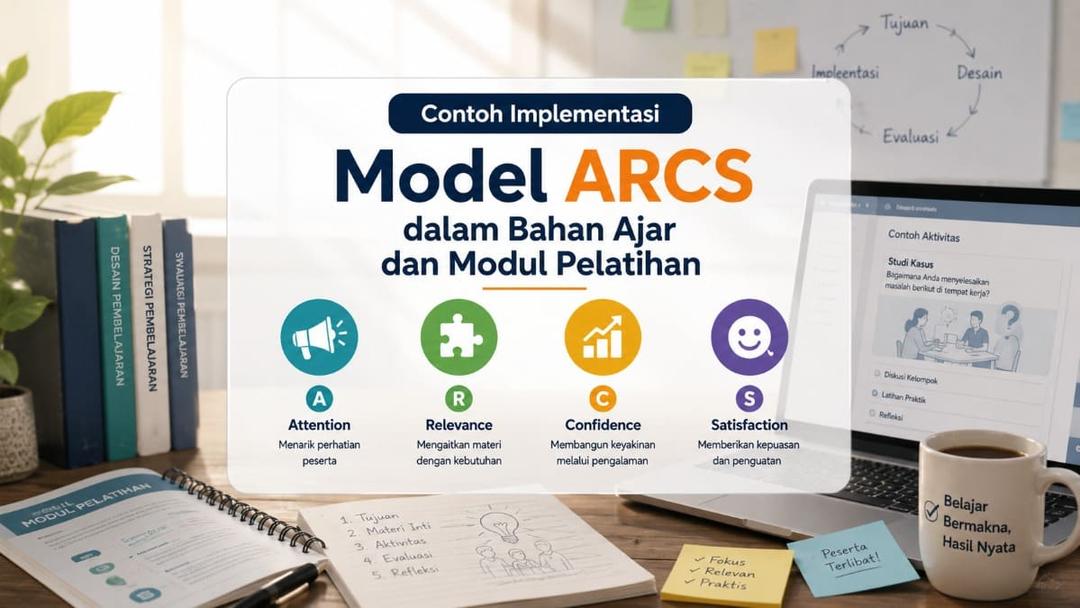
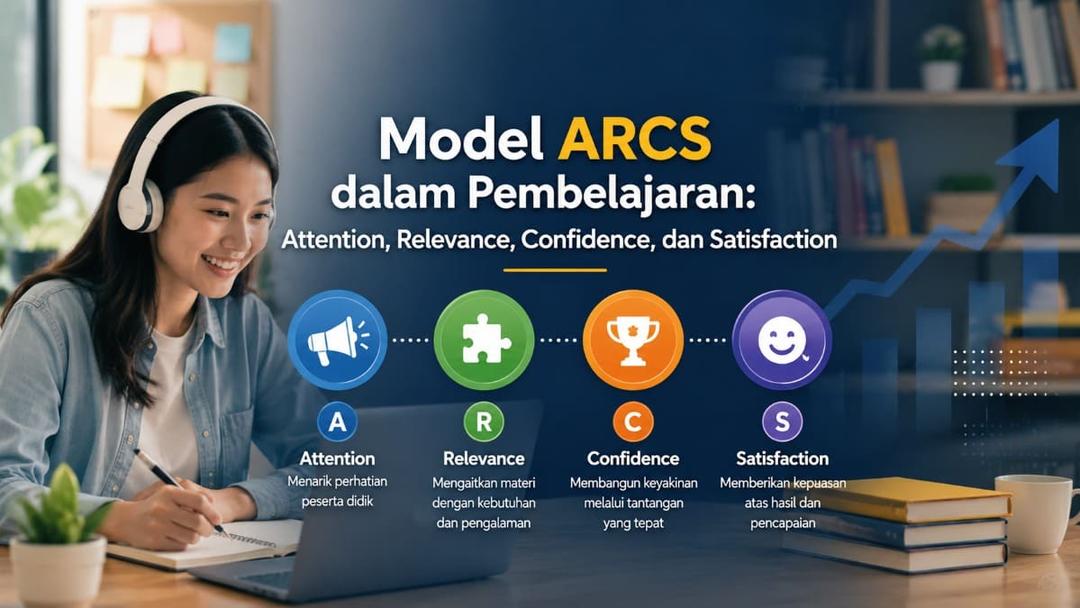
Within the
ARCS model of learning motivation, confidence is one of four motivational
components: Attention, Relevance, Confidence, and Satisfaction. John Keller’s
motivational design framework treats confidence as something that can be
influenced by course design, including expectations, challenge levels, learner
control, and opportunities to experience success.
Confidence is not created by telling every learner, “You can
do this.”
That statement may be encouraging, but it gives the learner
little practical evidence. A stronger design helps the learner answer more
useful questions:
- What
am I expected to do?
- Is
this course suitable for my current level?
- What
happens when I make a mistake?
- How
will I know that I am improving?
- Can
I practise before being formally assessed?
- Where
can I get help?
- What
will I be able to do after completing the course?
When those questions remain unanswered, even capable
learners may hesitate. They may postpone the first lesson, avoid difficult
activities, skip assessments, or leave the course after an early setback.
Confidence grows when learners can connect effort, strategy,
support, and visible progress to a credible learning outcome.
Confidence is not the same as making learning easy
A course that removes every challenge may protect learners
from temporary discomfort, but it can also deprive them of evidence that they
are becoming more capable.
A novice project manager, for example, may complete a
sequence of multiple-choice questions about risk management. If all the
questions are obvious, the learner may receive a high score without becoming
more confident about creating an actual risk register.
A better learning sequence might begin with a worked
example, continue with a partially completed template, and then ask the learner
to identify and document risks in a realistic scenario. The task becomes more
demanding, but the difficulty is structured.
This distinction is central to confidence design:
- unnecessary
difficulty creates frustration;
- insufficient
challenge creates shallow reassurance;
- supported
challenge creates credible confidence.

How to Build Confidence Before the Course Begins
Confidence begins before learners consume the first lesson.
At this stage, the primary design problem is uncertainty.
Learners may not know whether the program matches their needs, whether they
have enough background knowledge, how much time it will require, or what they
will be asked to produce.
Institutions often focus their pre-course communication on
promotion: course benefits, instructor credentials, certificates, or inspiring
outcomes. Those elements may encourage registration, but they do not
necessarily prepare learners to begin confidently.
A confidence-building pre-course experience should make the
learning journey understandable.
Define success in observable terms
Broad outcomes such as “understand digital marketing” or
“master leadership” are difficult for learners to evaluate.
More observable outcomes provide a clearer basis for
confidence:
- create
a basic campaign brief;
- identify
the target audience for an offer;
- calculate
three core campaign metrics;
- conduct
a structured one-to-one feedback conversation;
- demonstrate
the correct steps in a safety procedure.
Observable outcomes show learners what successful
performance looks like. They also help instructors align lessons, practice
activities, and assessments.
For a beginner, this clarity reduces the fear that success
depends on hidden expectations.
Explain the starting level honestly
Courses frequently use labels such as “beginner-friendly,”
even when they assume substantial prior knowledge.
A course may describe itself as an introduction to data
analysis but immediately use spreadsheet functions, statistical terminology,
and imported datasets without explanation. Learners who struggle may conclude
that they are not capable, when the actual problem is an inaccurate
prerequisite description.
Before enrolment or during onboarding, explain:
- required
prior knowledge;
- optional
but useful experience;
- devices
or software needed;
- expected
weekly time;
- types
of assignments;
- language
or literacy requirements;
- availability
of instructor, mentor, or peer support.
A diagnostic activity can also help learners identify the
right starting point. However, it should be presented as guidance rather than a
judgment of intelligence.
For programs serving mixed learner levels, consider
directing participants toward different entry lessons or pathways. The article
on designing
beginner, intermediate, and advanced learning paths explains how this can
be done without developing three completely separate courses.
Make the first action unmistakably clear
A learner who enters a platform and sees twelve modules,
multiple discussion areas, several downloads, and an assessment deadline may
not know where to begin.
The first action should be visible and low-friction:
- confirm
the learning objective;
- complete
a brief orientation;
- take
a non-graded starting check;
- open
the first lesson;
- complete
one simple learning activity.
A clear beginning reduces decision load. It also allows the
learner to experience progress before the program becomes demanding.
This is one reason learner onboarding should not be treated
as a purely administrative process. A well-designed onboarding sequence
establishes expectations, explains navigation, introduces support, and gives
learners an achievable first step.
Give learners a realistic picture of difficulty
Confidence is weakened when marketing promises an effortless
learning journey but the actual program requires sustained practice.
It is better to communicate that some activities may be
challenging while also explaining how learners will be supported.
For example:
“You do not need previous bookkeeping experience. Some
exercises involve calculations, but each process is demonstrated before you
complete a guided practice task.”
That statement is more useful than either extreme:
“This course is extremely easy.”
or:
“This intensive course is only for highly committed people.”
The first may create false expectations. The second may
discourage suitable learners before they begin.
Learners become more confident when the path is clear, not when the challenge is hidden.
How to Strengthen Confidence During the Course
During the course, confidence should become progressively
more evidence-based.
Learners need repeated opportunities to experience the
relationship between instruction, effort, practice, feedback, and improved
performance. This is where course structure matters more than motivational
language.
Break complex performance into manageable stages
A complex skill usually contains several smaller
capabilities.
Consider a course on delivering an effective sales
presentation. The final performance may require the learner to:
- identify
the audience’s problem;
- structure
a persuasive message;
- explain
the value proposition;
- use
evidence;
- respond
to objections;
- deliver
the presentation clearly;
- end
with an appropriate next step.
Asking learners to deliver the full presentation immediately
may overwhelm beginners. A stronger sequence isolates the components before
combining them:
- analyse
the audience;
- write
the problem statement;
- develop
the value proposition;
- record
a one-minute explanation;
- practise
objection handling;
- deliver
the complete presentation.
This does not reduce the final standard. It changes the
route toward that standard.
Use examples that reveal the process
Completed examples can be useful, but they sometimes hide
the decisions, mistakes, and revisions that produced the final result.
A polished lesson plan does not show how the teacher
selected the objective, rejected irrelevant activities, revised the assessment,
or adjusted the timing.
To build confidence, show parts of the process:
- an
early draft and a revised version;
- a
worked example with annotations;
- a
common error and its correction;
- a
demonstration with instructor commentary;
- two
acceptable solutions and the reasoning behind each;
- a
checklist used by an experienced practitioner.
These examples help learners see that competent work is
often produced through iteration rather than immediate perfection.
Provide practice before high-stakes evaluation
Learners should not encounter the expected performance for
the first time in the final assessment.
Low-stakes retrieval and formative assessment can help
learners check their understanding while there is still time to adjust.
Formative assessment is intended to provide ongoing information that
instructors and learners can use to improve teaching and learning, rather than
merely recording a final result.
Useful confidence-building activities may include:
- a
short ungraded quiz after a lesson;
- a
scenario with immediate explanations;
- a
practice submission before the assessed version;
- peer
review guided by a clear rubric;
- a
self-check against an example;
- a
simulation that can be repeated;
- a
brief application task using the learner’s own context.
Retrieval practice can support learning by asking learners
to recall and use information rather than only rereading it. However, quiz
results should be interpreted carefully. A low score may reveal a useful
knowledge gap; it should not automatically be framed as failure.

Make progress visible without turning it into empty gamification
Progress indicators can help learners understand where they
are in a course. However, a progress bar alone does not prove capability.
A learner may reach 80% completion by opening lessons
without completing meaningful practice. Conversely, another learner may spend
substantial time revising one difficult assignment while the platform shows
limited numerical progress.
Use multiple forms of progress evidence:
- lessons
completed;
- capabilities
demonstrated;
- quiz
patterns over time;
- drafts
improved;
- practice
attempts completed;
- feedback
addressed;
- milestones
reached;
- real-world
tasks performed.
The article on how
small wins build momentum in online learning explores how manageable
achievements can help learners continue. Small wins are most valuable when they
represent genuine movement toward a larger capability, not when they reward
activity without learning.
A completion indicator tells learners how far they have
travelled. Performance evidence tells them what they can now do.
FitAcademy
Design Learning Experiences That Help Learners Progress Confidently
FitAcademy supports teachers, instructors, and training institutions that want to organise mobile-friendly learning, short lessons, quizzes, progress tracking, and structured learner journeys in one learning environment.
Learn More About FitAcademyFeedback and Assessment Should Produce Direction, Not Fear
Feedback has a direct influence on how learners interpret
their performance.
A grade or score answers, “How did I perform?” It does not
always answer, “What should I do next?”
When learners receive only a numerical result, they may
construct their own explanation. A low score may become “I am not good at
this,” even when the actual problem is narrower: they misunderstood one
concept, skipped an instruction, or need more practice with a particular
procedure.
Action-oriented feedback gives learners specific information
about how to make progress toward the learning goal. CAST’s Universal Design
for Learning guidance emphasises feedback that is relevant, constructive,
accessible, timely, and connected to possible action.
Focus feedback on the work and the next action
Compare these comments:
“You are not confident enough.”
“Good job.”
“Your explanation identifies the customer problem, but the
proposed solution is still too general. Add one example showing how the product
addresses the problem.”
The third comment is more useful because it identifies what
is working, what needs revision, and what the learner should do next.
A practical feedback structure is:
- restate
the intended outcome;
- identify
evidence of progress;
- specify
the most important gap;
- recommend
the next action;
- invite
another attempt where appropriate.
This structure prevents feedback from becoming either vague
praise or a catalogue of faults.
Do not praise performance that has not occurred
Encouragement matters, but inaccurate praise can damage
credibility.
When a learner submits incomplete work, describing it as
“excellent” may feel supportive in the moment. It also makes later correction
confusing. Learners may struggle to distinguish genuine achievement from
automatic platform messaging.
More credible encouragement might be:
“You have correctly identified the main stakeholders. The
next step is to explain what each stakeholder needs from the project.”
The learner receives recognition without being misled about
the quality or completeness of the work.
Allow revision when revision reflects real practice
In many professional contexts, strong work is developed
through review and revision. Learning design should reflect this where
appropriate.
A trainee may revise a proposal, improve a teaching
demonstration, correct a spreadsheet, repeat a safety simulation, or resubmit a
portfolio item after feedback.
Revision supports confidence because learners experience
improvement directly. It also communicates that an initial error is not
necessarily a permanent verdict.
However, unlimited retries without reflection can become
mechanical. If learners repeat a quiz until they recognise the answer pattern,
the activity may no longer provide meaningful evidence.
A better retry process may require learners to:
- review
an explanation;
- revisit
a specific lesson;
- describe
why the original answer was incorrect;
- complete
a different version of the task;
- apply
the same principle in a new scenario.
|
Assessment approach |
Likely learner interpretation |
Confidence implication |
Better design response |
|
One final high-stakes assessment |
“I have one chance to prove whether I am capable.” |
May create avoidance or excessive anxiety |
Add guided practice and formative checks before the final
task |
|
Easy quiz with obvious answers |
“I completed it, but I do not know whether I can apply
it.” |
Can create weak or inflated confidence |
Include application questions and realistic scenarios |
|
Score without explanation |
“I failed, but I do not know why.” |
Can reduce confidence without improving performance |
Provide specific explanations and next steps |
|
Detailed criticism without prioritisation |
“Everything is wrong.” |
Can overwhelm the learner |
Identify the most important improvement first |
|
Practice, feedback, and revision |
“I can see how my work is improving.” |
Builds credible confidence |
Preserve clear standards while allowing purposeful
revision |
How to Maintain Confidence After the Course
Completing a course does not automatically mean that
learners feel ready to use what they learned.
A participant may pass every lesson but still hesitate when
facing a real customer, classroom, machine, workplace process, or community
assignment. This transfer gap is especially common when course activities
remain abstract.
After the course, confidence should shift from “I can
complete the lessons” to “I can use this capability in an appropriate
situation.”
Help learners name what they can now do
Course completion messages frequently say:
“Congratulations. You have completed the program.”
A stronger closing process asks learners to identify the
capabilities they have developed.
For example:
“After completing this program, you should now be able to
prepare a basic cash-flow record, classify common business expenses, and
identify when cash shortages may occur.”
This gives the learner a more concrete basis for confidence
than completion alone.
A final capability summary may include:
- tasks
the learner can perform independently;
- tasks
the learner can perform with a reference or checklist;
- situations
that still require supervision;
- common
limitations or exceptions;
- recommended
next-level practice.
Such distinctions are particularly important in
safety-sensitive, regulated, clinical, technical, or financial training. A
course should not imply that limited online practice automatically establishes
professional competence.
Use a final task that resembles real application
The strongest closing evidence usually comes from
performance.
Depending on the program, learners might:
- produce
a work sample;
- complete
a realistic scenario;
- conduct
a demonstration;
- create
an action plan;
- analyse
a case;
- teach
the concept to someone else;
- apply
the process in their workplace;
- document
a small implementation project.
The task should be proportionate to the course. A short
introductory course does not need a complex capstone project, but it should
still help learners use the central concept.
For a microlearning program, several small lessons can lead
toward one integrated application. The learner might complete short modules on
customer personas, value propositions, and communication channels before
creating a one-page marketing plan.
Encourage reflection based on evidence
Reflection becomes more useful when it is specific.
Instead of asking, “How did you feel about the course?” ask:
- Which
task can you now complete that you could not complete before?
- Which
part still requires a checklist or example?
- What
mistake can you now recognise?
- Which
feedback changed your approach?
- Where
will you apply this skill first?
- What
evidence will show that the application worked?
These questions help learners construct an accurate picture
of their capability.

Provide a bridge to continued practice
Confidence may decline if learners complete a course and
then wait months before using the skill.
A post-course bridge can include:
- a
downloadable checklist;
- a
30-day application plan;
- optional
refresher lessons;
- short
practice reminders;
- a
community discussion;
- scheduled
coaching;
- a
workplace assignment;
- a
follow-up self-assessment;
- recommendations
for the next learning path.
These elements should not create endless course dependence.
The objective is to help learners become more independent.
A course is not finished when the final lesson ends. It is finished when the learner can recognise where and how to use the capability.
A Practical Before–During–After Confidence Framework
The following framework can be used when designing a new
course or reviewing an existing learning program.
|
Learning stage |
Learner’s central question |
Design priority |
Practical methods |
Evidence to monitor |
|
Before the course |
“Is this suitable for me, and can I begin?” |
Reduce uncertainty and clarify expectations |
Accurate prerequisites, observable outcomes, orientation,
diagnostic check, clear first action |
Activation rate, orientation completion, diagnostic
patterns, early support requests |
|
Early course |
“Can I understand the basics?” |
Create orientation and an achievable first performance |
Worked examples, short lessons, guided practice,
low-stakes checks |
First-task completion, common misconceptions, repeated
navigation problems |
|
Middle of the course |
“Am I improving enough to continue?” |
Build evidence of progress |
Increasing challenge, practice cycles, actionable
feedback, milestone tasks |
Attempt patterns, revisions, feedback use, capability
milestones |
|
End of the course |
“Can I perform the intended task?” |
Integrate knowledge and practice |
Authentic final task, rubric, application scenario,
capability summary |
Demonstrated performance, remaining gaps, learner
self-assessment |
|
After the course |
“Can I use this outside the course?” |
Support transfer and independent application |
Implementation plan, checklist, refresher content,
follow-up reflection |
Workplace application, return practice, supervisor or
mentor observations |
Step 1: Audit the course from the learner’s perspective
Review the experience as though you are entering the program
for the first time.
Check whether learners can immediately identify:
- who
the course is for;
- what
they will learn;
- what
they need before beginning;
- how
long the course may take;
- what
the first activity is;
- how
assessments work;
- where
support is available.
Do not rely only on the course creator’s familiarity with
the platform. What appears obvious to the instructor may be unclear to a
first-time learner.
Step 2: Map every major challenge to appropriate support
List the course’s most difficult moments.
For each one, ask:
- What
prior knowledge does this task require?
- Has
that knowledge already been taught?
- Is
there a worked example?
- Can
learners practise safely?
- Is
the instruction clear?
- What
feedback will they receive?
- Can
they try again?
- Is
the difficulty essential to the learning outcome?
This process helps distinguish productive challenge from
avoidable friction.
Step 3: Define confidence indicators
Confidence itself can be explored through brief self-report
questions, but institutions should also examine behaviour and performance.
Potential indicators include:
- whether
learners begin promptly;
- whether
they attempt challenging activities;
- whether
they return after an incorrect answer;
- whether
they use feedback;
- whether
they revise their work;
- whether
they request relevant support;
- whether
they complete application tasks;
- whether
their self-assessment matches demonstrated performance.
Avoid assuming that course completion proves confidence.
Some learners complete a program while remaining uncertain. Others may leave
after gaining the specific information they needed.
Learning analytics should therefore be interpreted alongside
the course purpose and learner context.
Step 4: Review confidence across learner groups
A course can appear successful overall while creating
unnecessary barriers for particular participants.
Review whether instructions, navigation, media, deadlines,
language, and assessment formats work for learners with different levels of:
- prior
knowledge;
- digital
familiarity;
- language
proficiency;
- available
study time;
- device
access;
- confidence
in formal education;
- professional
experience;
- accessibility
requirements.
The Universal Design for Learning framework emphasises
learner variability and recommends multiple ways to support engagement,
participation, action, and expression.
This does not mean every learner must receive a completely
different course. It means the course should avoid treating one type of learner
as the default when reasonable alternatives are possible.

Common Mistakes That Undermine Learner Confidence
Confidence problems are not always caused by difficult
subject matter. They are often created by the way the learning experience is
organised.
Mistaking encouragement for instructional support
Positive language cannot compensate for unclear
explanations, missing examples, or inaccessible support.
When learners repeatedly struggle, adding more automated
messages such as “Keep going!” may feel disconnected from their actual problem.
A better response identifies where learners are stuck and
provides a targeted resource, hint, example, or alternative explanation.
Using difficulty to prove course quality
Some programs equate difficulty with credibility.
Complex terminology, dense materials, rigid deadlines, and
unforgiving assessments may make a course feel serious, but they do not
automatically make it educationally strong.
The relevant question is not whether the course is
difficult. It is whether the difficulty reflects the capability learners are
expected to develop.
A compliance course should not become difficult because the
navigation is confusing. A design course may appropriately be difficult because
learners must make and justify complex decisions.
Giving learners too much content before practice
Long sequences of videos and readings can create an illusion
of preparation.
Learners may recognise concepts while watching an instructor
but struggle to retrieve or apply them independently. Without practice, they
receive little evidence of actual capability.
Introduce opportunities to use the material throughout the
course rather than postponing all application until the end.
Allowing one mistake to define the learner
A single incorrect answer, failed attempt, or missed
deadline should not automatically become a permanent label.
Course systems and instructor communication should
distinguish between:
- a
knowledge gap;
- an
instruction misunderstanding;
- insufficient
practice;
- a
technical problem;
- a
temporary personal constraint;
- a
genuine failure to meet the required standard.
These situations may require different responses.
Maintaining standards does not require treating every error
as proof that the learner is unsuitable.
Making progress invisible
Learners can work hard without recognising improvement,
particularly in long or complex programs.
If the platform only shows a final completion percentage, it
may overlook important progress such as improved drafts, fewer errors, faster
task completion, or stronger reasoning.
Design milestone tasks that allow learners to compare
earlier and later performance.
Confusing confidence with satisfaction
Confidence concerns whether learners believe they can
succeed and perform. Satisfaction concerns whether the learning experience and
its outcomes feel worthwhile and rewarding.
The two influence each other, but they are not
interchangeable.
A learner may feel confident about performing a task but
dissatisfied with an irrelevant course. Another learner may enjoy the course
while remaining uncertain about applying the skill.
The related article on creating
satisfaction without relying only on certificates examines how meaningful
outcomes, recognition, relevance, and learning experience design contribute to
satisfaction.
Conclusion
Learner confidence should be designed across the entire
course journey.
Before the course, confidence depends on clarity: learners
need to understand the starting level, expected outcomes, learning process, and
first action.
During the course, confidence becomes stronger when learners
successfully complete meaningful tasks, receive actionable feedback, revise
their work, and see credible evidence of progress.
After the course, confidence must be connected to transfer.
Learners should be able to explain what they can now do, recognise remaining
limitations, and identify where the capability can be applied.
The objective is not to make every learner feel certain at
every moment. Productive learning often includes doubt, correction, and effort.
The objective is to prevent uncertainty from becoming avoidable helplessness.
For teachers and training institutions, this requires more
than motivational messaging. It requires coherent outcomes, appropriate
challenge, guided practice, feedback workflows, learner progress evidence, and
a learning platform that makes the journey understandable.
When those elements work together, confidence becomes more
than encouragement. It becomes a realistic belief supported by experience.
FitAcademy
Build a Clearer and More Supportive Learning Journey
FitAcademy helps institutions, teachers, and training providers organise structured learning experiences with mobile-friendly content, focused lessons, quizzes, learner progress tracking, and practical learning pathways.
Learn More About the PlatformFAQ
Why is learner confidence important in online learning?
Learner confidence influences whether participants begin
activities, attempt difficult tasks, respond constructively to mistakes, and
continue after setbacks. In online learning, learners may have less immediate
reassurance from an instructor, so clear expectations, accessible support,
visible progress, and timely feedback become particularly important. Confidence
does not guarantee completion, but low confidence can make ordinary learning
difficulties feel like evidence that the learner does not belong in the course.
How can an instructor build confidence without lowering standards?
Keep the final performance standard clear while improving
the route toward it. Provide worked examples, guided practice, formative
checks, specific feedback, and opportunities for revision. Learners can receive
substantial support during practice while still being expected to demonstrate
the required capability independently in the final task. Support and standards
are not opposites when the support prepares learners to meet the standard.
Do easy quizzes improve learner confidence?
Easy quizzes may create temporary reassurance, but they can
also produce inflated confidence if the questions do not reflect the intended
learning outcome. A useful quiz should be achievable at the learner’s stage
while still requiring recall, interpretation, or application. Explanations
should help learners understand both correct and incorrect responses.
Confidence is more credible when quiz performance predicts the learner’s
ability to use the knowledge.
What should instructors do when learners lose confidence after failing an assessment?
First, identify why the learner struggled. Review whether
the problem involved missing prerequisite knowledge, unclear instructions,
insufficient practice, technical access, or genuine performance gaps. Then
provide a specific recovery path, such as reviewing one lesson, examining an
example, completing targeted practice, or revising the task. Avoid both
dismissing the failure and treating it as a permanent judgment of the learner’s
ability.
Can progress tracking increase learner confidence?
Progress tracking can support confidence when it shows
meaningful development. Lesson completion, capability milestones, improved
assessment performance, revision history, and completed application tasks can
help learners recognise progress. A percentage bar alone is less informative
because it usually measures navigation or completion rather than mastery.
Institutions should connect progress indicators to the actions and capabilities
that matter in the course.
How can training institutions measure learner confidence?
Institutions can combine brief self-assessment questions
with behavioural and performance evidence. They may examine whether learners
attempt challenging tasks, return after mistakes, use feedback, revise work,
request support, and complete practical applications. Confidence ratings should
be compared with demonstrated performance because learners may either
underestimate or overestimate their capability. The goal is calibrated
confidence: a realistic understanding of both strengths and remaining
development needs.