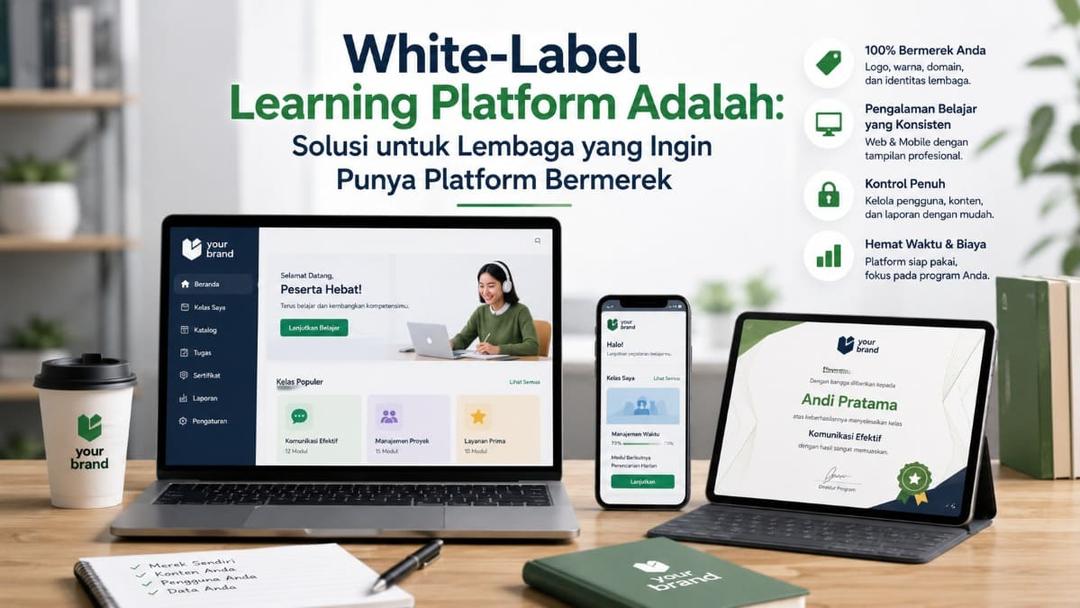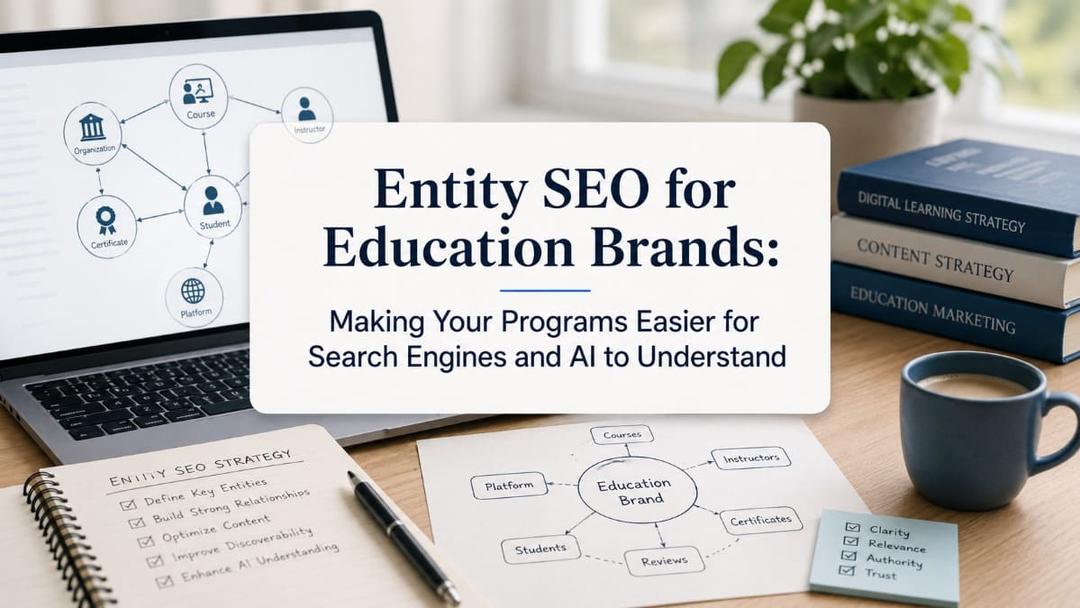
Many organizations begin online education by combining
familiar tools: video conferencing for live sessions, spreadsheets for
attendance, cloud folders for materials, chat groups for communication, payment
tools for monetization, and separate forms for feedback. At first, this
approach feels flexible and inexpensive. Over time, however, it can create
hidden operational costs: fragmented learner data, inconsistent delivery,
manual administration, weak branding, and limited scalability. This article
explains why tool sprawl becomes a serious learning operations issue, how it
affects organizations that deliver online education, and when a more structured
learning platform or white-label learning ecosystem becomes a better long-term
option.
- Quick
Answer
- Why
Multiple Tools Feel Affordable at First
- Where
the Hidden Costs Actually Appear
- The
Operational Difference Between Tool Stacking and Learning Systems
- What
Fragmentation Does to Learner Experience and Data
- When
Multiple Tools Still Make Sense
- How
Organizations Can Reduce Tool Sprawl Without Rebuilding Everything
- Common
Mistakes Organizations Make
- Conclusion
- FAQ
Quick Answer
Using multiple tools for online education can look
cost-effective in the beginning, but the real cost often appears in learning
operations. When content, learner access, communication, payments, attendance,
progress tracking, certificates, and analytics are spread across separate
systems, organizations usually spend more time coordinating the system than
improving the learning experience.
This affects training providers, associations, communities,
institutions, and corporate learning teams that need consistent delivery,
learner data, brand control, and scalable operations. The issue is not that
separate tools are always bad. Many organizations need them during early
experimentation. The problem begins when temporary tools become the permanent
operating model.
The hidden cost includes administrative workload, duplicated
data entry, inconsistent learner journeys, weaker completion tracking,
difficult reporting, and limited ownership of the learning experience. A
structured online learning platform or white-label learning ecosystem can help
reduce this fragmentation by centralizing content delivery, learner management,
analytics, branding, and monetization in one more coherent system.

Why Multiple Tools Feel Affordable at First
Most organizations do not start online education with a full
learning infrastructure plan. They start with urgency.
A training team needs to move a workshop online. A community
wants to run paid classes. An association wants to educate members. A nonprofit
needs to deliver capacity-building sessions. A corporate team needs to onboard
employees across different locations. In those early stages, the fastest
solution is usually to combine tools that are already available.
A common setup may look like this:
- live
sessions through a webinar or video meeting platform
- learning
materials stored in a shared cloud folder
- attendance
tracked through spreadsheets
- reminders
sent through email or chat groups
- assignments
collected through online forms
- payments
handled through a separate payment link
- certificates
created manually
- feedback
gathered in another survey tool
Individually, each tool may seem affordable. Some are free.
Some are already included in the organization’s software subscription. Some are
easy enough for staff members to use without technical training.
The problem is that online education is not only a
collection of activities. It is an operating system. Once learners, content,
schedules, assessments, payments, and reporting begin to grow, the organization
needs more than isolated tools. It needs a repeatable learning delivery
workflow.
The hidden cost is not the price of each tool. It is the friction between them.
This is where many organizations underestimate the shift
from “running online sessions” to “operating an online learning system.” A
webinar can deliver a class. A folder can store content. A spreadsheet can
track attendance. But none of these alone creates a structured learner journey.
The difference becomes clearer as the organization tries to
scale.
One program may be manageable with manual coordination. Five
programs already require more administration. Twenty programs may expose
serious operational gaps. At that point, staff members are no longer simply
supporting learning. They are manually stitching together a fragmented system
every day.
A tool stack can help an organization start quickly, but it
rarely becomes a scalable learning operation unless the workflow, data
structure, and learner experience are intentionally designed.
This does not mean every organization must immediately adopt
a full learning platform. Early experimentation has value. The key question is
whether the current tool setup is still helping the organization learn and
grow, or whether it has become a hidden operational burden.
Where the Hidden Costs Actually Appear
The cost of multiple tools is rarely visible in one invoice.
It appears across people, processes, data, learner experience, and
decision-making.
For online education teams, this matters because learning
operations are usually handled by people who already have other
responsibilities. Program managers, trainers, administrators, community
managers, marketing teams, and finance teams may all become involved in
delivery. When the system is fragmented, each team absorbs part of the
complexity.
|
Hidden Cost Area |
How It Appears in Daily Operations |
Business Impact |
|
Administration time |
Staff manually move data between tools, check attendance,
send reminders, and update learner records |
Higher workload and slower program delivery |
|
Learner confusion |
Learners must open different links for sessions,
materials, assignments, payments, and certificates |
Lower engagement and more support requests |
|
Data fragmentation |
Progress, completion, payment, attendance, and feedback
live in separate places |
Weak reporting and limited learning analytics |
|
Brand inconsistency |
Learners experience different interfaces and communication
styles across tools |
Weaker trust and less professional learning experience |
|
Content governance |
Materials are duplicated across folders, chats, and emails |
Version control problems and outdated content risk |
|
Scaling difficulty |
Each new cohort requires manual setup across several
platforms |
Growth becomes operationally expensive |
|
Monetization friction |
Payment, access, and course delivery are not connected |
Revenue tracking and learner access become harder to
manage |
The most underestimated cost is usually staff time. If a
team spends hours each week copying registrant data, checking payment status,
sending manual access links, creating attendance reports, and preparing
certificates, the organization is paying for coordination work that could be
reduced through a more integrated system.
Another hidden cost is inconsistency. Learners may receive
one link through email, another through a chat group, materials in a folder,
assignments through a form, and completion confirmation from an administrator.
Even when the content quality is strong, the experience can feel scattered.
For organizations, this creates a serious perception issue.
Learners judge professionalism not only by the expertise of the instructor, but
also by the smoothness of the learning journey.

For associations, communities, and membership organizations,
the hidden cost can become even more strategic. Education is often part of
member value. If learning delivery feels inconsistent, members may not see the
organization as a serious knowledge platform. This is why the platform model
matters, especially for groups that want to build long-term educational
authority rather than only host occasional events.
Organizations exploring this issue may also need to compare
the broader role of a white-label
learning ecosystem with simpler tools that only solve one part of the
delivery process.
The Operational Difference Between Tool Stacking and Learning Systems
A tool stack is a collection of applications. A learning
system is a coordinated environment designed around the learner journey and the
organization’s operational goals.
This distinction is important because many organizations
believe they already have an online education system when they actually have a
collection of disconnected tools. The tools may function individually, but the
overall experience depends on manual coordination.
A learning system usually connects several core layers:
- content
delivery
- learner
registration and access
- progress
tracking
- communication
- assessment
or completion logic
- certification
or proof of participation
- reporting
and analytics
- payment
or monetization, when relevant
- branding
and learner experience
The goal is not simply to reduce the number of tools. Some
specialized tools may still be necessary. The goal is to reduce operational
fragmentation.
|
Dimension |
Multiple Disconnected Tools |
Structured Learning System |
|
Learner journey |
Spread across links, messages, folders, and forms |
Organized around a clear path |
|
Administration |
Manual coordination between platforms |
More centralized workflow |
|
Data visibility |
Scattered across separate files and dashboards |
Easier to consolidate and analyze |
|
Brand experience |
Inconsistent across platforms |
More coherent and professional |
|
Scalability |
Each new cohort adds manual work |
Repeatable program structure |
|
Monetization |
Payment and access may be disconnected |
Payment, access, and delivery can be aligned |
|
Governance |
Content versions may become difficult to control |
Content can be managed more systematically |
The operational difference becomes especially visible when
an organization needs to repeat a program. A one-time webinar may only require
basic coordination. A recurring academy, member education program, workforce
training initiative, or paid course catalog requires a more stable structure.
This is why learning operations should not be treated as an
afterthought. The platform model affects how the organization designs programs,
manages users, controls access, tracks outcomes, and improves content over
time.
A serious learning program needs more than delivery tools. It needs operational continuity.
For organizations moving from event-based education to
structured programs, the next challenge is often how to transform scattered
webinar activity into a more consistent learning environment. That transition
is explored further in structured
learning systems, which focuses on the shift from live-session chaos to
repeatable education delivery.
What Fragmentation Does to Learner Experience and Data
Learner experience is often where tool fragmentation becomes
visible first.
From the organization’s perspective, the process may feel
manageable because each internal team understands its own tool. The program
team knows where the attendance sheet is. The trainer knows where the
presentation slides are stored. The finance team knows which payment link was
used. The community manager knows where reminders were sent.
The learner does not see that internal logic. The learner
only experiences the journey.
When the journey is fragmented, learners may ask questions
such as:
- Where
do I access the course material?
- Which
link should I use for the next session?
- Where
do I submit the assignment?
- How
do I know whether I completed the program?
- When
will I receive my certificate?
- Where
can I revisit the lesson after the live session?
- Who
should I contact if I cannot access the material?
Every extra question adds friction. In learning, friction
matters because attention is already limited. If learners spend too much effort
navigating the system, they have less energy for the content itself.
Data fragmentation creates another problem. Many
organizations want to improve learning outcomes, but they cannot easily see
what is happening across the full journey. Attendance may be available in one
tool. Feedback may be in another. Course completion may be tracked manually.
Payment data may sit with finance. Learner communication may remain in chat
history.
This makes it difficult to answer basic operational
questions:
- Which
programs have the highest completion?
- Which
learners are active but not completing?
- Which
topics generate repeat participation?
- Which
cohorts need follow-up?
- Which
learning formats work best for mobile learners?
- Which
programs are commercially sustainable?
Without a centralized or well-structured data trail,
decisions become based on impressions rather than evidence.

This is one reason organizations increasingly consider more
integrated platforms when education becomes part of their core offering. The
value is not only in hosting content. It is in creating a more reliable
operational foundation for delivery, analysis, and continuous improvement.
Learning analytics become useful only when the organization
can connect learner activity, content engagement, completion, and program
performance into a meaningful operational view.
For FitAcademy’s context, this connects directly to platform
ownership. A branded learning environment can support a more consistent learner
journey while giving the organization a clearer view of how its learning
programs are performing. The strongest value usually appears when education is
not a one-time activity, but an ongoing capability.
FitAcademy
Explore a More Structured Way to Deliver Online Education
FitAcademy helps organizations move beyond scattered tools by providing a branded, mobile-first learning environment for content delivery, learner access, progress tracking, and scalable education programs.
Explore White-LabelWhen Multiple Tools Still Make Sense
Using multiple tools is not always a mistake. In some
situations, it is the right approach.
For early-stage programs, separate tools can help
organizations test demand before investing in a more structured platform. A
community may want to validate whether members are interested in a specific
topic. A training provider may want to test a new course format. A company may
want to run a small pilot before expanding across departments.
Multiple tools can also make sense when the learning
activity is occasional, simple, and low-risk. If the organization only runs a
few informal sessions each year, a full learning system may be unnecessary.
The problem begins when the operating model no longer
matches the ambition of the program.
A fragmented tool setup becomes risky when:
- the
number of learners increases
- programs
become recurring
- certificates
or completion records matter
- payments
and access control need to be connected
- reporting
is required for stakeholders
- content
must be reused across cohorts
- the
organization wants stronger branding
- learner
data needs to support strategic decisions
- education
becomes part of member value, customer success, workforce development, or
revenue generation
At that stage, the question is not “Can we keep using these
tools?” The better question is “What is this tool setup costing us
operationally?”
This distinction is important because many organizations
delay platform decisions until the pain becomes obvious. By then, the team may
already have messy data, inconsistent learner records, duplicated content, and
unclear reporting processes.
A more practical approach is to define transition triggers.
For example, an organization may decide that once it reaches a certain number
of courses, cohorts, learners, instructors, or recurring programs, it will move
from a temporary tool stack to a structured learning platform.
This keeps the organization flexible without allowing
fragmentation to become permanent.
How Organizations Can Reduce Tool Sprawl Without Rebuilding Everything
Reducing tool sprawl does not always require a complete
rebuild. In many cases, organizations can improve learning operations step by
step.
The first step is to map the current learning workflow. This
should include every major activity from learner registration to completion.
The goal is to see where the organization relies on manual coordination,
duplicate data entry, or disconnected communication.
A useful workflow map may include:
- how
learners register
- how
payments are handled, if relevant
- how
access is granted
- where
learning content is stored
- how
live sessions are delivered
- how
assignments or assessments are managed
- how
reminders are sent
- how
attendance or progress is tracked
- how
certificates are issued
- how
feedback is collected
- how
reports are prepared
Once the workflow is visible, the organization can identify
which parts create the most friction. The answer is not always “replace
everything.” Sometimes the priority is to centralize content first. In other
cases, the biggest issue is learner access, reporting, monetization, or mobile
learning experience.

A practical transition may follow this sequence:
- Clarify
the learning business or program model
The organization should define whether education is primarily for internal training, member value, customer education, paid courses, certification, community development, or creator-led monetization. - Identify
the highest-friction workflow
Instead of solving every issue at once, start with the part that consumes the most time or creates the most learner confusion. - Centralize
the learner journey
Learners should know where to start, what to do next, how to access content, and how completion is recognized. - Consolidate
operational data
Attendance, progress, engagement, payment, and completion data should become easier to review, even if some tools remain connected externally. - Strengthen
branding and trust
A more coherent learning environment helps learners understand that the program is part of the organization’s professional education ecosystem. - Plan
for repeatability
The system should make it easier to run the next cohort, not just solve the current one.
For organizations evaluating platform direction, the
decision often comes down to how much ownership they need. A marketplace may
help with exposure, but usually limits brand and learner relationship control.
A generic SaaS LMS may help organize delivery, but may not fully support the
organization’s brand, mobile-first strategy, or custom learning business model.
A custom-built platform offers deep control, but can require more time, budget,
and technical responsibility. A white-label learning platform can sit between
these options by offering branded ownership without requiring the organization
to build everything from scratch.
This is especially relevant for platform
models for associations and communities, where education often supports
member engagement, professional development, and organizational authority.
Common Mistakes Organizations Make
The most common mistake is judging the current tool setup
only by subscription cost. A free or low-cost tool can still become expensive
when it creates repetitive manual work, support issues, reporting gaps, or poor
learner experience.
Another mistake is assuming that online education is only
about content delivery. Content matters, but the system around the content
determines whether learners can access it, complete it, revisit it, and trust
the organization delivering it.
Many organizations also underestimate the cost of
inconsistent data. At small scale, spreadsheets may be enough. At larger scale,
scattered records make it harder to understand learner behavior, prove program
value, and make confident decisions about future learning investments.
A more subtle mistake is treating branding as decoration.
Branding is not only a logo on a page. In online education, branding affects
trust, continuity, perceived professionalism, and the learner’s sense that the
program belongs to a credible organization. When learners move through
disconnected tools, the brand experience becomes diluted.
Finally, some organizations wait too long to define
ownership. If learner relationships, program history, content structure, and
engagement data are scattered across external tools, the organization may
struggle to build long-term educational assets.
|
Mistake |
Why It Happens |
Better Approach |
|
Choosing tools only by price |
Early budgets are limited and free tools feel safe |
Include staff time, learner friction, and reporting needs
in the cost analysis |
|
Treating webinars as the whole learning system |
Live sessions are easy to launch |
Build a structured journey before, during, and after each
session |
|
Ignoring learner data ownership |
Data feels less urgent during small pilots |
Plan how progress, completion, and engagement data will be
stored and used |
|
Managing content through scattered folders |
Teams need fast sharing |
Create content governance and version control |
|
Adding more tools to fix each new problem |
Each tool solves one immediate gap |
Review the full workflow before expanding the stack |
|
Delaying platform strategy |
The current setup still works “well enough” |
Define clear triggers for moving to a structured learning
platform |
The better strategic approach is not to reject all tools. It
is to understand which tools support the learning operation and which tools are
compensating for the absence of a real system.
For organizations that want a branded, scalable environment,
a white-label learning platform can be a
practical next step when the current tool stack starts limiting growth.
Conclusion
Multiple tools can help organizations start online education
quickly. They are useful for experimentation, pilots, and small programs. The
risk appears when a temporary setup becomes the permanent infrastructure for a
growing learning operation.
The hidden cost is rarely obvious at first. It appears in
administrative workload, learner confusion, data fragmentation, weak reporting,
inconsistent branding, and difficulty scaling. These costs can quietly reduce
the effectiveness of even strong educational content.
For organizations, the strategic question is not simply
whether a tool works. Many tools work. The deeper question is whether the full
learning operation is coherent, repeatable, measurable, and aligned with
long-term goals.
As online education becomes more central to institutions,
communities, associations, training providers, and business teams, platform
decisions become more important. A structured learning system gives
organizations a stronger foundation for learner experience, operational
control, data visibility, and brand ownership.
The goal is not complexity. The goal is clarity: one
learning experience that learners can trust, teams can manage, and
organizations can scale.
FitAcademy
Build a More Coherent Online Learning Experience
If your organization is managing courses, learners, content, communication, and reporting across too many disconnected tools, FitAcademy can help you explore a branded white-label learning platform designed for scalable education delivery.
Explore White-LabelFAQ
Why is using multiple tools for online education a problem?
Using multiple tools becomes a problem when the learner
journey, content access, communication, payments, progress tracking, and
reporting are disconnected. The organization may still be able to deliver
sessions, but staff often spend more time coordinating tools manually. Over
time, this can increase workload, create data gaps, and make the learning
experience feel less professional.
Are multiple tools always bad for online learning?
No. Multiple tools can be useful during early pilots, small
programs, or informal training activities. They allow organizations to test
demand without major investment. The issue begins when the program grows and
the same fragmented setup must support recurring cohorts, learner records,
certificates, payments, analytics, and brand consistency.
What is the biggest hidden cost of online education tool sprawl?
The biggest hidden cost is often operational time. Staff may
need to copy data between systems, send manual reminders, check payments,
organize content links, update attendance records, and prepare certificates.
These activities may not appear as direct software costs, but they can reduce
team productivity and slow program growth.
When should an organization move from separate tools to a learning platform?
An organization should consider a structured learning
platform when online education becomes recurring, revenue-generating,
data-dependent, or strategically important. Common triggers include growing
learner numbers, multiple programs, certificate needs, stakeholder reporting,
mobile learning requirements, and the need for stronger brand control.
How does a white-label learning platform reduce fragmentation?
A white-label learning platform can centralize the learner
experience under the organization’s own brand. It may support content delivery,
learner access, progress tracking, analytics, and monetization in one more
coherent environment. The exact benefit depends on implementation, but the main
value is reducing disconnected workflows and improving ownership of the
learning experience.
Can organizations keep some external tools while using a learning platform?
Yes. Many organizations still use selected external tools
for live sessions, content production, marketing, customer support, or payment
workflows. The goal is not necessarily to eliminate every tool. The goal is to
make the learning platform the central system for the learner journey,
operational data, and education delivery.